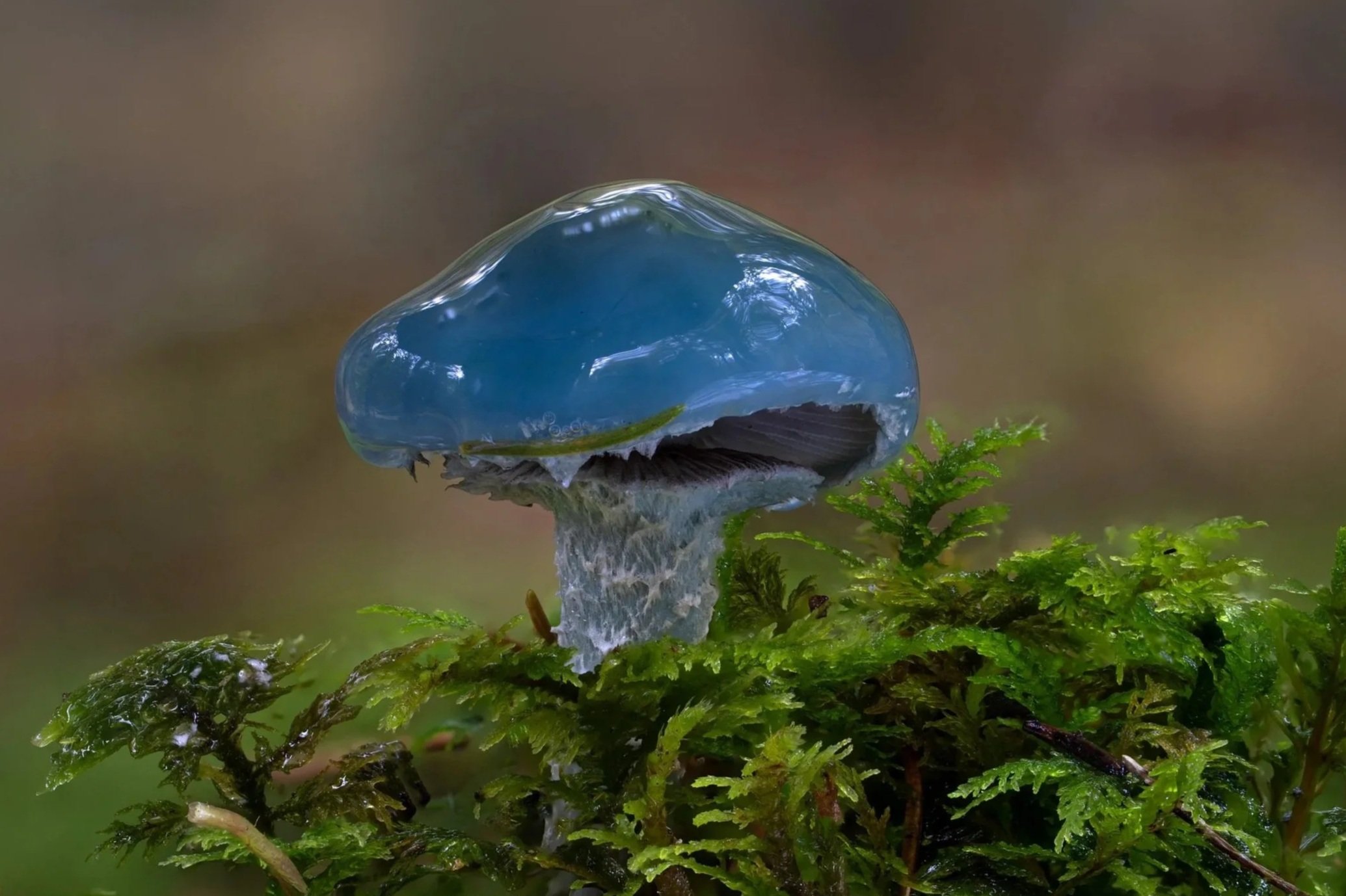
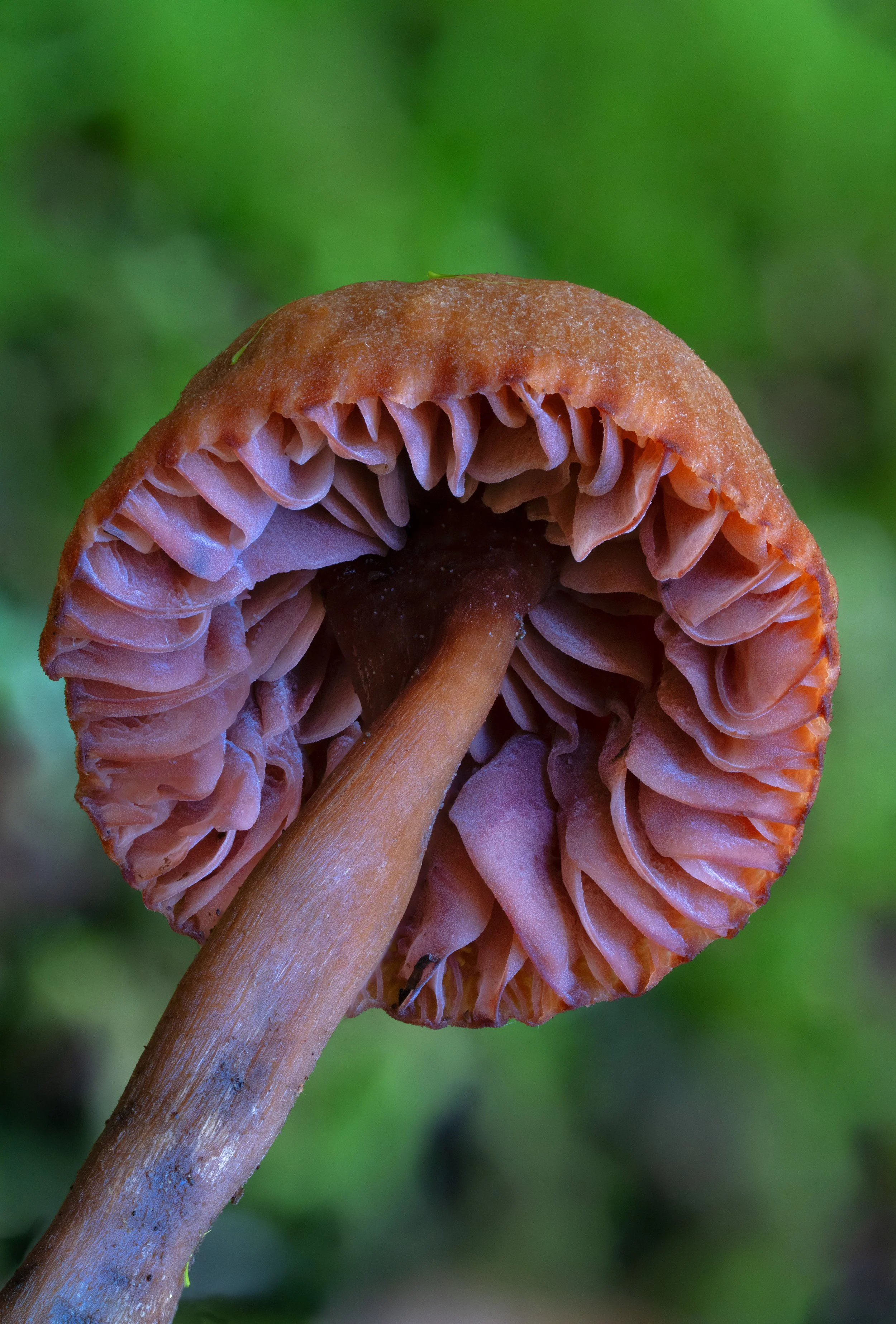
Stropharius sp.
Deep in the Austrian Alps lies an ancient forest few people are permitted to enter.
In this blog, we share the wonder, challenges and privilege of spending 11 days filming its fungal world — and why this experience left us with much to reflect upon. And scroll to the end for some ideas for a fungi-filled festive season.
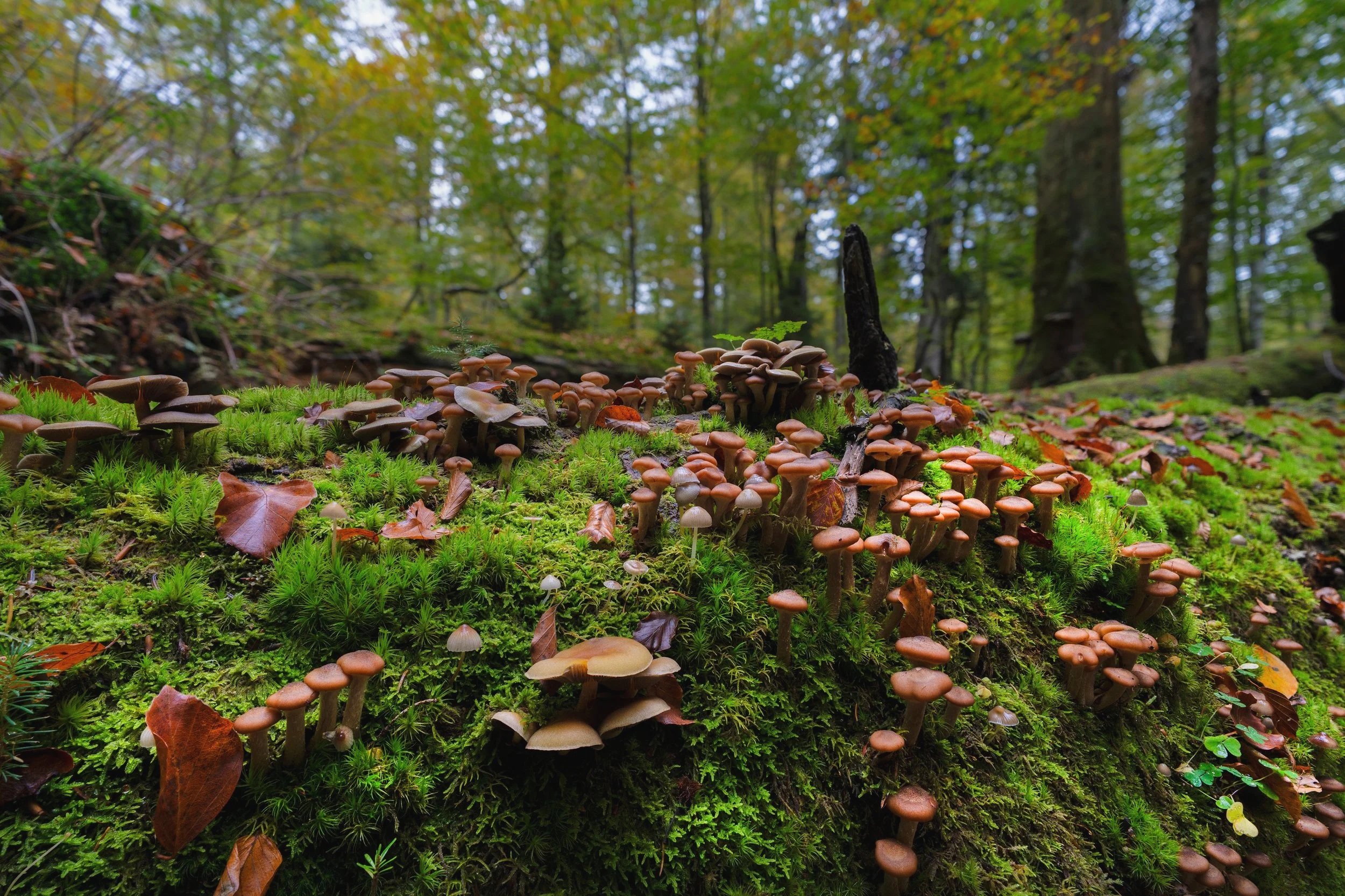
At least 4 species of fungi on a fallen log, Rothwald Primeval Forest.
Primeval Forest: A Fungal Quest
An ancient forest, a journey into the fungal world, and a story we feel privileged to tell.
There are very few places left in Europe where a forest has been allowed to simply be a forest.
No logging, no clearing, no tidying up fallen trees. Just nature, doing its own thing for centuries.
Deep in the Austrian Alps lies one such forest: Rothwald, part of the Dürrenstein-Lassingtal Wilderness Area and a UNESCO World Heritage site. It's home to the largest remaining primeval beech forest in the Alps.
Access to Rothwald is strictly restricted, with entry permitted only for authorised scientific expeditions that contribute to our understanding of the forest.
So when we were given the opportunity to document its fungal world, it was an immense honour and an experience neither Stephen nor I will ever forget.
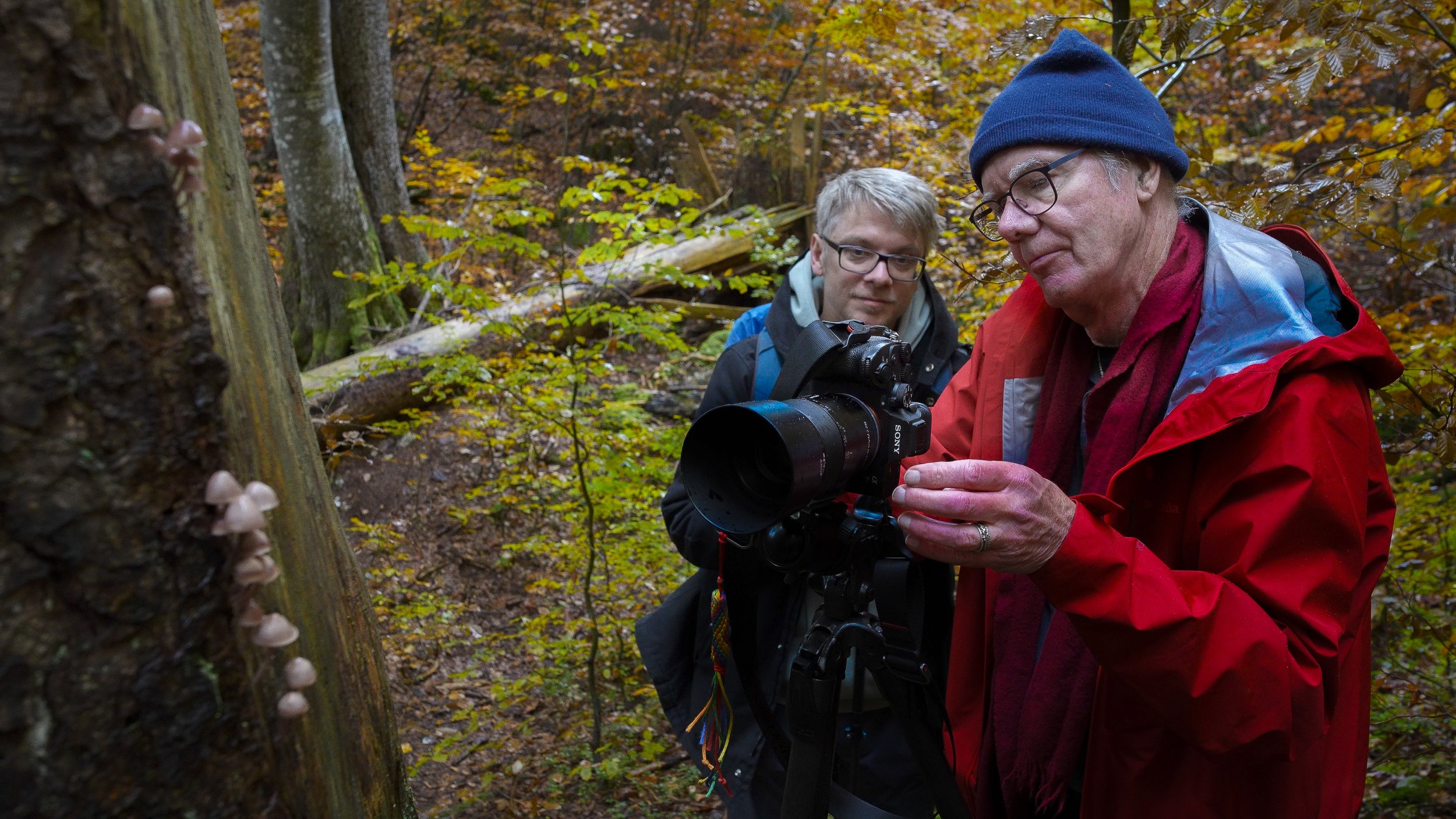
Stephen Axford and Rene Lux team up to photograph Rothwald’s fungi, including these sporing bodies of a Mycena sp.
A forest on its own terms
"The complexity of this forest is mind-boggling," Steve says in his interview in Primeval Forest: A Fungal Quest.
"When a tree falls, it just lies there until it rots away. And it provides an environment for thousands of different species of fungi for a start. And who knows how many insects? And bacteria and slime mould.
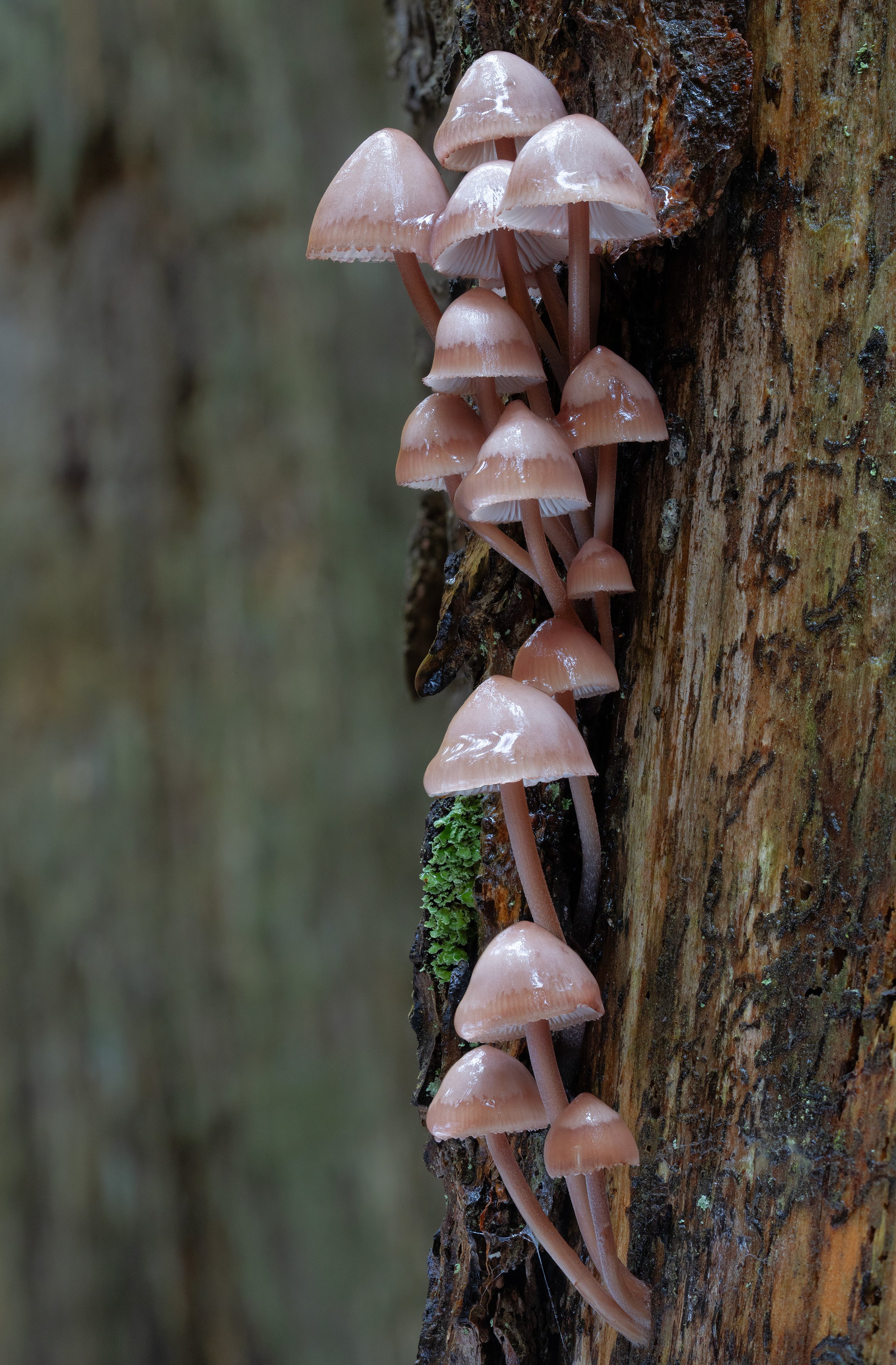
"It's just ecosystem on ecosystem on ecosystem."
Steve spent hours exploring a single fallen tree, documenting its fungi, the mosses covering it, and all the organisms that have made it their home.
And still, he would have seen only a fraction of what was there.
What makes Rothwald so special is not simply the age of its trees, but the continuity of life and death, growth and decay, that has unfolded with so little human interference.
A remarkable group of people, a shared purpose
We weren't alone on this journey.
Our Austrian partners, René Lux and Wolfgang Hinterdobler of MyPilz, helped make this project possible, bringing together a remarkable group of people who share our passion for fungi and the natural world.
We were joined by mycologist and conservationist Giuliana Furci, fungal ecologist Professor Mark Anthony, ecologist Viktoria Igel and musician and sound artist Cosmo Sheldrake, each bringing a different perspective to the experience of the forest.
Together, we explored a world where fungi connect, transform, recycle and sustain life.
Our documentary, Primeval Forest: A Fungal Quest, shares that experience and reveals something of the entangled relationships that make this forest so precious.
It's also a story about why places like Rothwald matter, not just as refuges for biodiversity, but as living examples of what nature can do when we give it space.
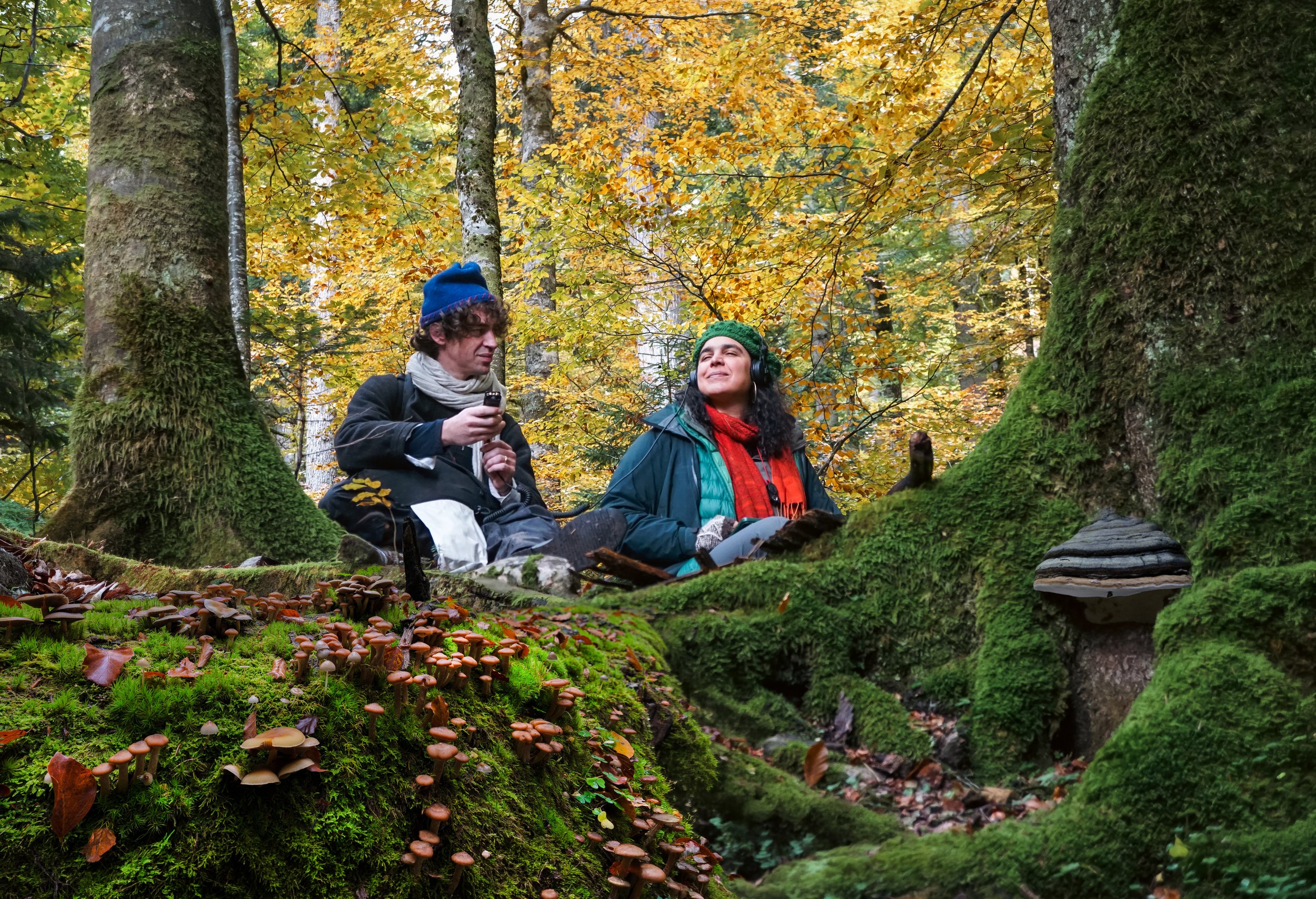
Cosmo Sheldrake and Giuliana Furci listen to the sounds of Rothwald.
Trying to capture a living, breathing forest
For me, filming Rothwald was both a joy and an enormous challenge.
How do you convey the sheer complexity of a forest like this? How do you capture the feeling of standing among its ancient trees, surrounded by layer upon layer of life, much of it hidden from view?
Then there were the practical realities. Filmmaking is challenging at the best of times, particularly when you're largely a crew of one. I was fortunate to have help for four days from Mike and Laura of @SYMCYTO, who captured some of the close-up footage of fungi and lugged some of my gear.
But all up, we had just 11 days in Rothwald to shoot a documentary. By comparison, Follow the Rain took us a couple of years to produce. And everyone involved in this expedition had seen that film, so expectations were, from my point of view, a little terrifying.
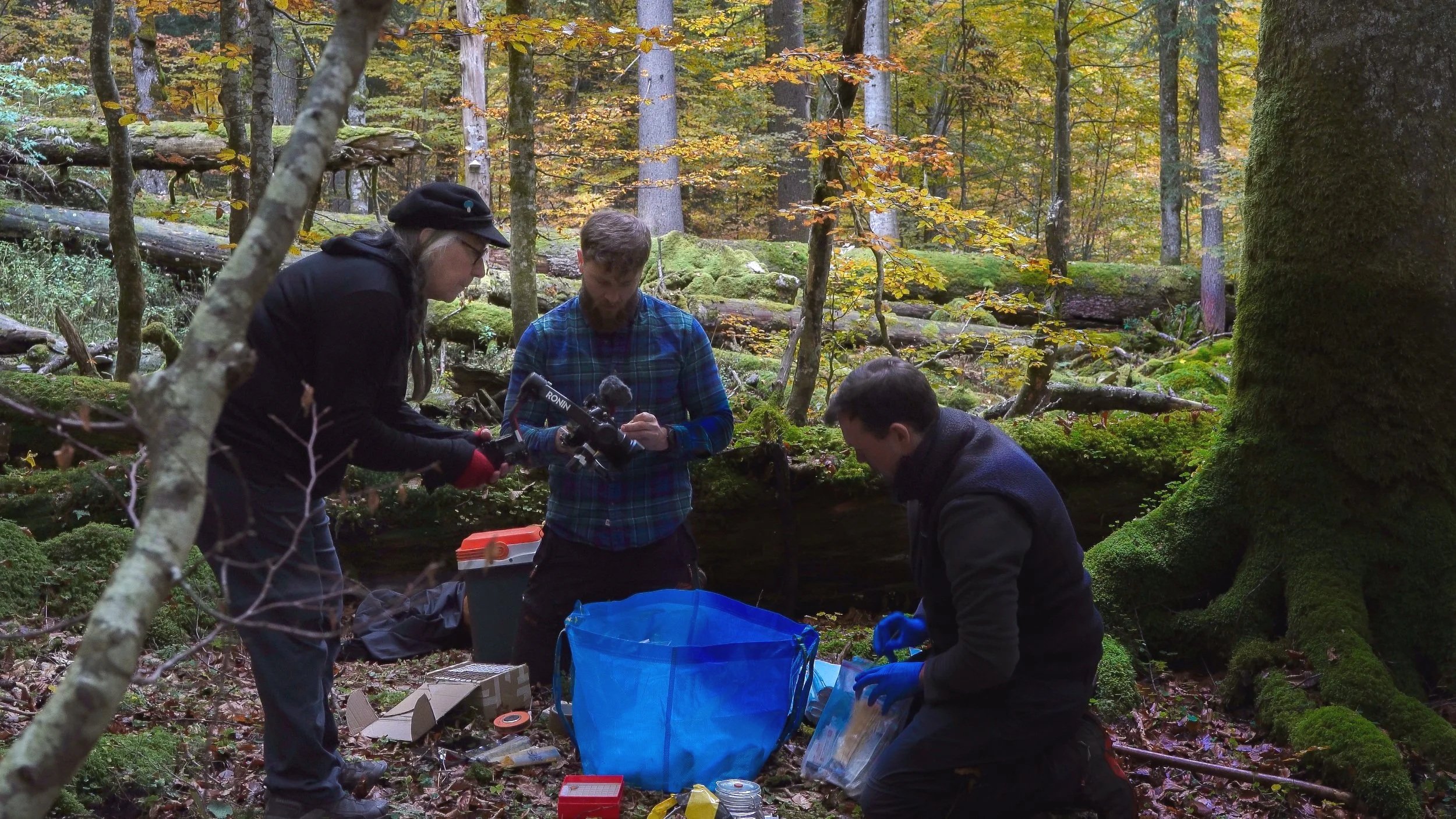
The forest, of course, didn't make things any easier. It's wet, muddy and not particularly kind to cameras and filming equipment.
Beyond the technical challenges, I felt a considerable responsibility to do justice not only to this ancient forest, but also to the people who had come together to tell its story. Each brought such commitment, passion and scientific expertise to their engagement with the forest and its fungal world.
And throughout, we had to remain acutely aware that we were visitors in a place whose greatest value lies in the fact that humans have largely left it alone. Making the documentary was our purpose, but treading lightly was just as important.
The privilege — and the paradox
Towards the end of our time in Rothwald, Steve reflected on something that had been troubling him.
"It's a great honour to document this ancient forest — to try to give its fungi a face and a voice.
"But I'm also aware that in a forest like this, every step I take, every log I climb over, I do damage."
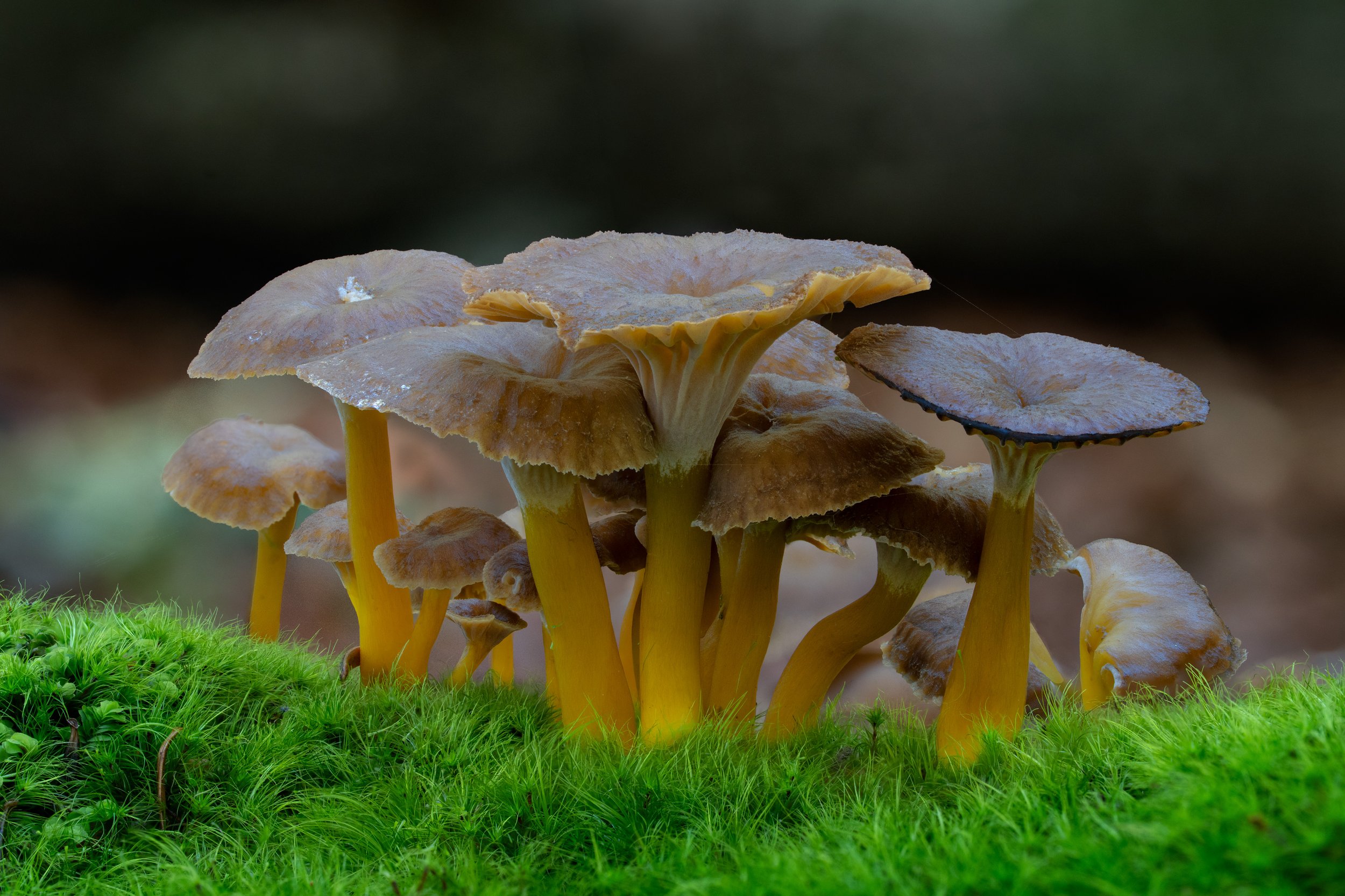
Cantherellus sp.
It's a contradiction we both felt.
We had been given the rare privilege of entering this forest to document its fungal life and the scientific expedition, hoping that by sharing its beauty and complexity we might inspire others to care about its protection.
But the very thing that makes Rothwald so precious is its freedom from human interference.
"Now that my work is done, the best thing for this forest, its fungi and every organism that lives here, is that I never return," Steve says.
Those words have stayed with me.
The story we tell about Rothwald is not that it is a wonderful place to explore, but that it deserves to exist on its own terms.
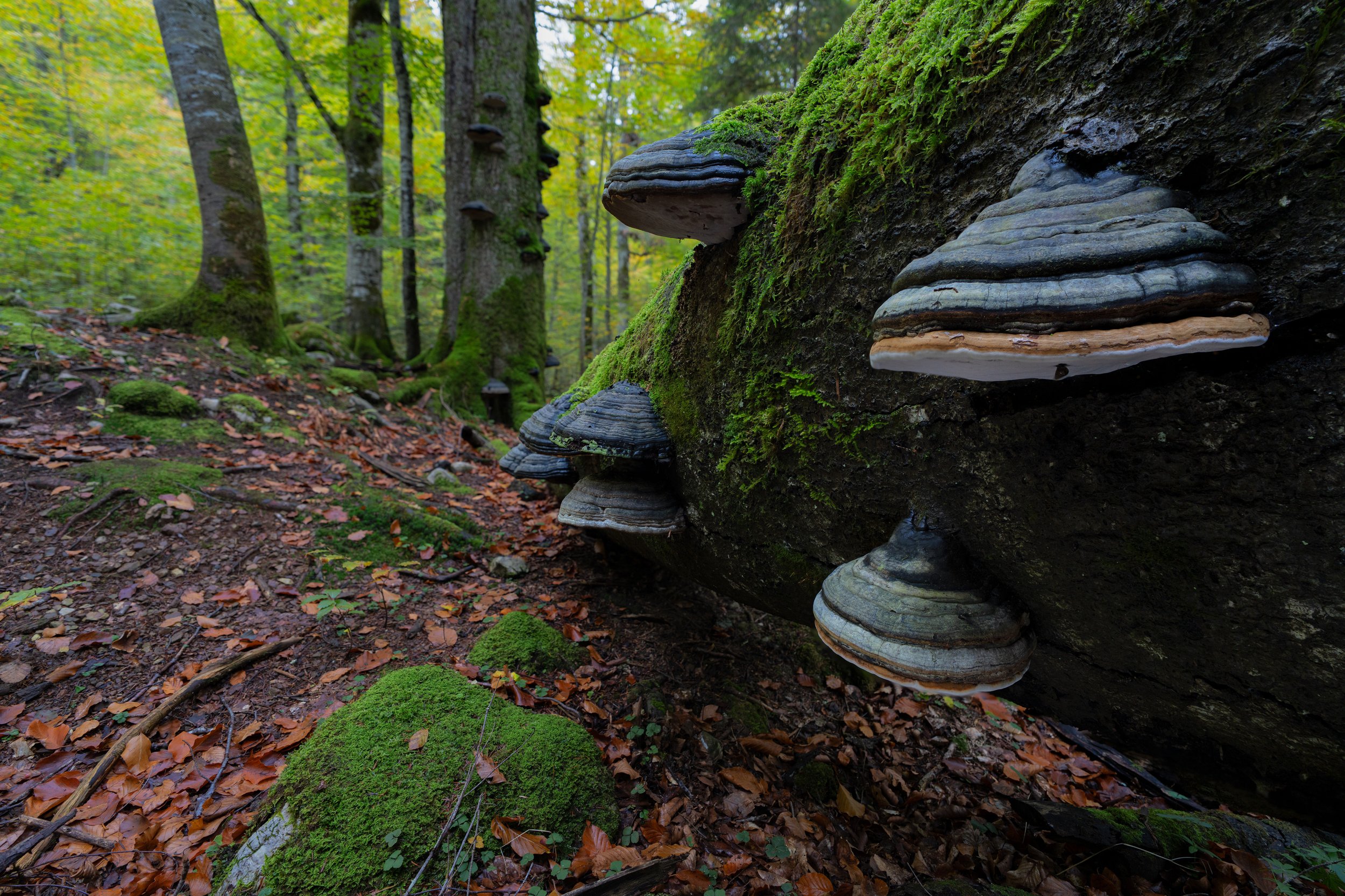
Fomes fomentarius - the mycelial memory of a conk fungus is the narrator in Primeval Forest: A Fungal Quest
Help us bring this story to the world
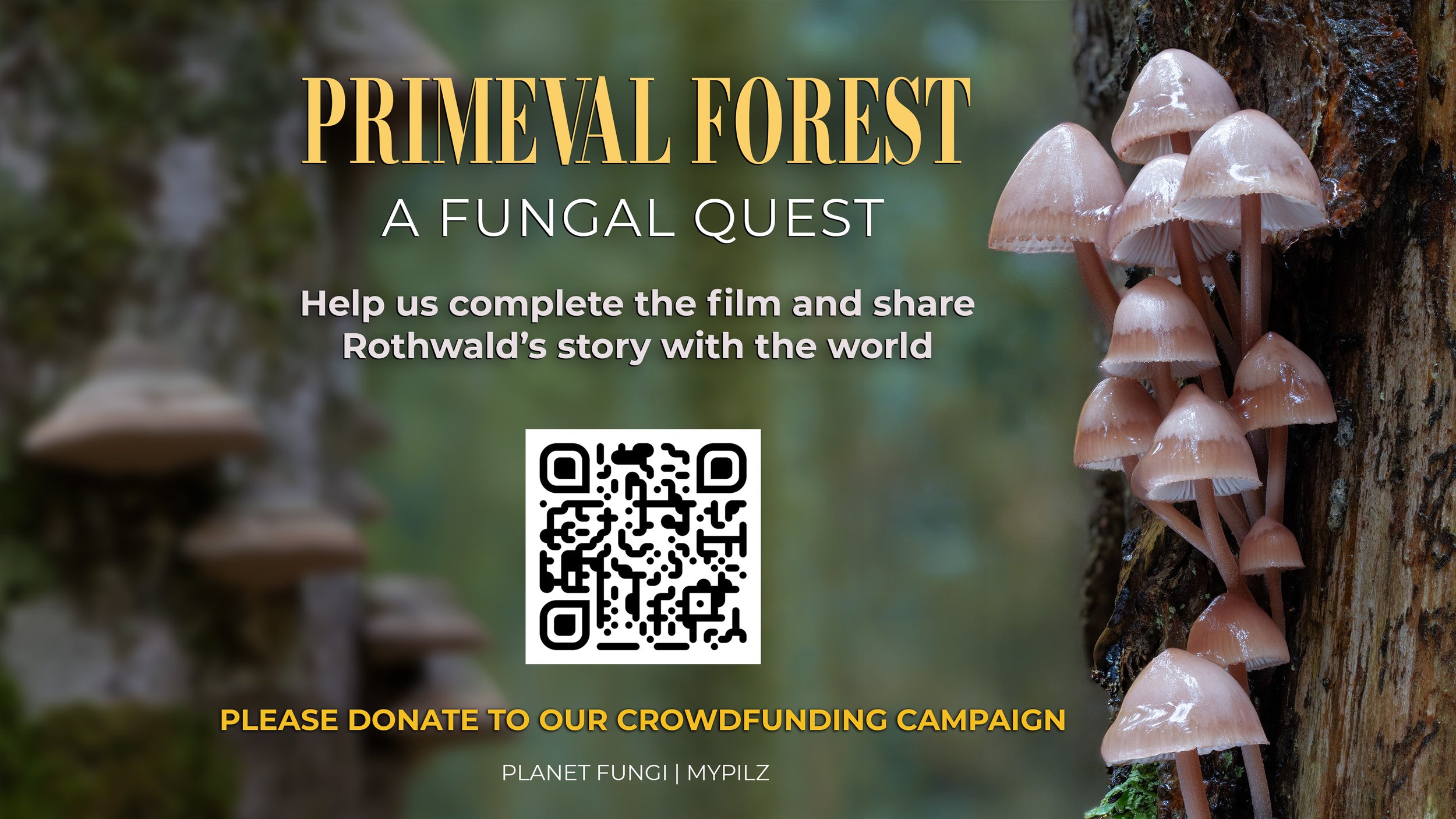
Tomorrow, Sunday 22 November, we're launching our crowdfunding campaign to help complete Primeval Forest: A Fungal Quest.
Filming is complete, and we're nearing the end of the editing process.
But creating an independent nature documentary takes considerable resources. We still need funding for the specialist post-production work that will bring the film to the screen, and to help share its message with audiences around the world.
Together with our partners at MyPilz, we want the film to contribute to a greater understanding of fungi, and to a lasting commitment to protecting this forest and others like it.
Every old-growth forest on this planet is precious, critical to sustaining life as we know it.
If you've enjoyed our films, photographs and stories over the years, we'd be enormously grateful if you would consider donating to this next chapter.
Find out more about the expedition, watch our crowdfunding film and donate to complete Primeval Forest: A Fungal Quest
And even if you can't contribute financially, please share the campaign with friends and family.
Thank you for being part of our journey. It means a great deal to us.
In our next newsletter, we'll be introducing a fungi hunter in Transylvania who showed us that LBMs (Little Brown Mushrooms) can be every bit as charismatic as their brightly coloured cousins — especially when they break the taxonomic rules of their genus.
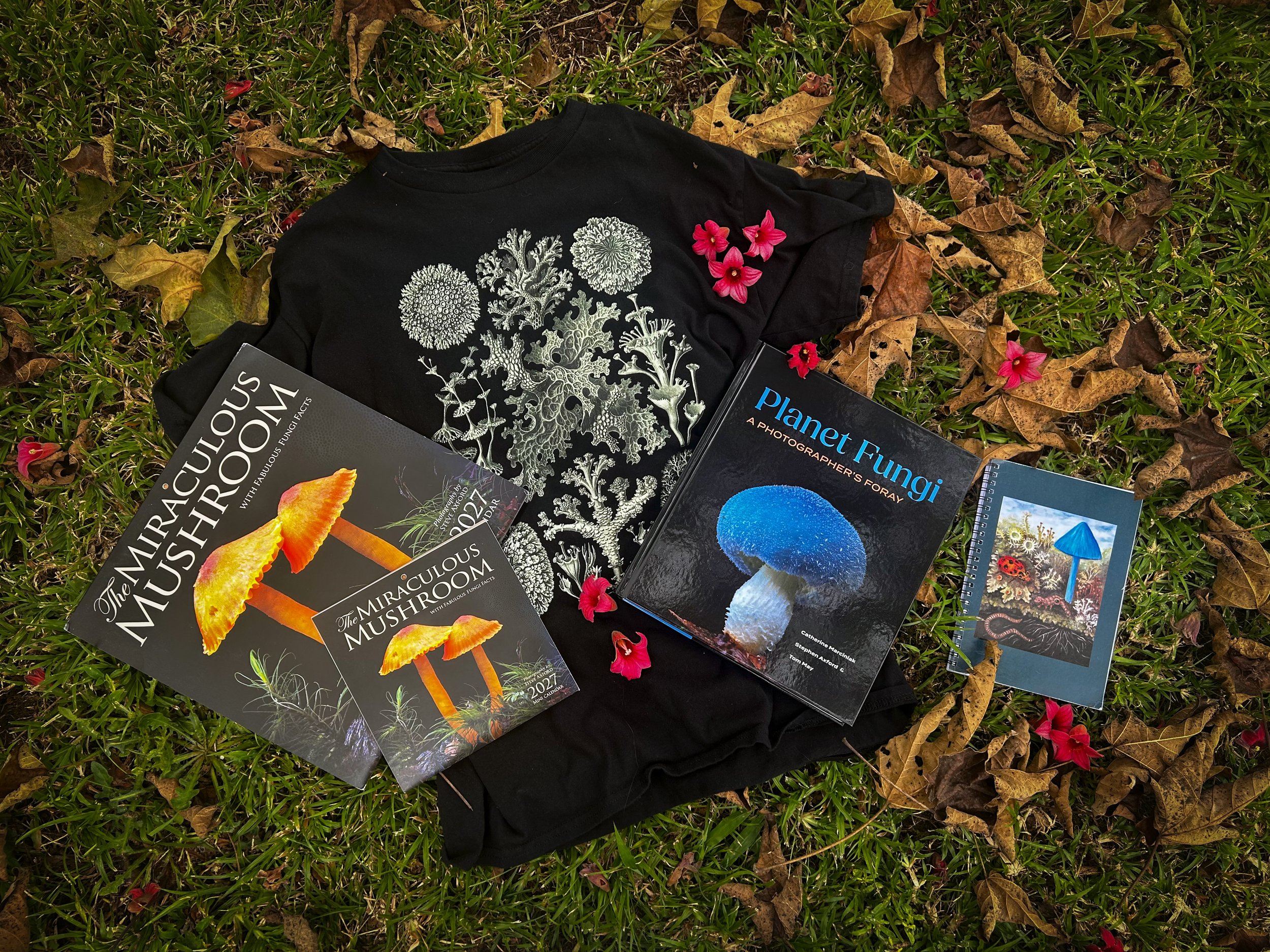
Fungi for the festive season — books, calendars and a little wearable fungal art.
Ideas for a fungi-filled festive season
With the festive season just around the corner, we've put together a few gift ideas for the fungi and nature lovers in your life — or perhaps a little treat for yourself.
Our coffee-table book, Planet Fungi: A Photographer's Foray, is packed with Stephen's photography and stories from our adventures in the fungal world.
Our 2027 fungi calendars are looking better than ever (we think they're our best yet), and this year we've added a new mini version alongside the much-loved standard size.
And then there's our MushMerch — T-shirts, notebooks, mouse pads and more, featuring Stephen's fungi photographs, Catherine's fungi paintings, and some beautiful wearable lichen showcasing the intricate illustrations of 19th-century naturalist and artist Ernst Haeckel.
A little fungal inspiration to spread the mushlove.
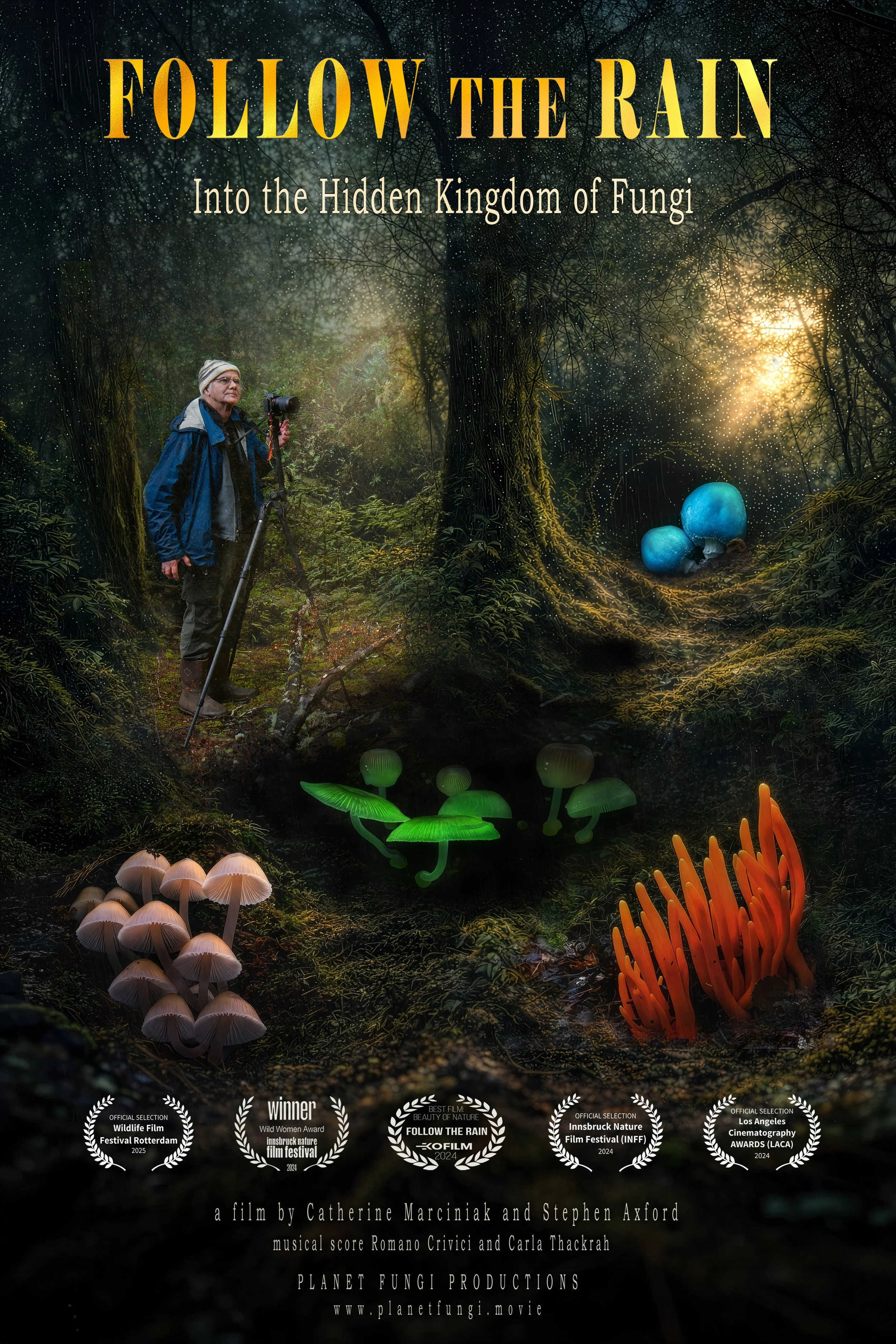
COME ADVENTURING WITH PLANET FUNGI
There are now plenty of ways to join us on our fungal adventures.
🎟️ Host a community screening of our award-winning documentary Follow the Rain.
🍿 Watch our award-winning documentary Follow the Rain, currently streaming in Australia and New Zealand — Netflix, Germany — RTL, Thailand — TrueVisions.
📖 Discover our book, Planet Fungi: A Photographer's Foray.
🏫 Bring the magic of fungi into the classroom with our free Follow the Rain Study Guide.
🎬 Enjoy more free fungi documentaries on the Planet Fungi YouTube channel.
📷 Follow our latest photography, films and adventures on Instagram and Facebook.
Pulchrocladia retipora — the Coral Lichen — a stunning piece of fungal architecture.
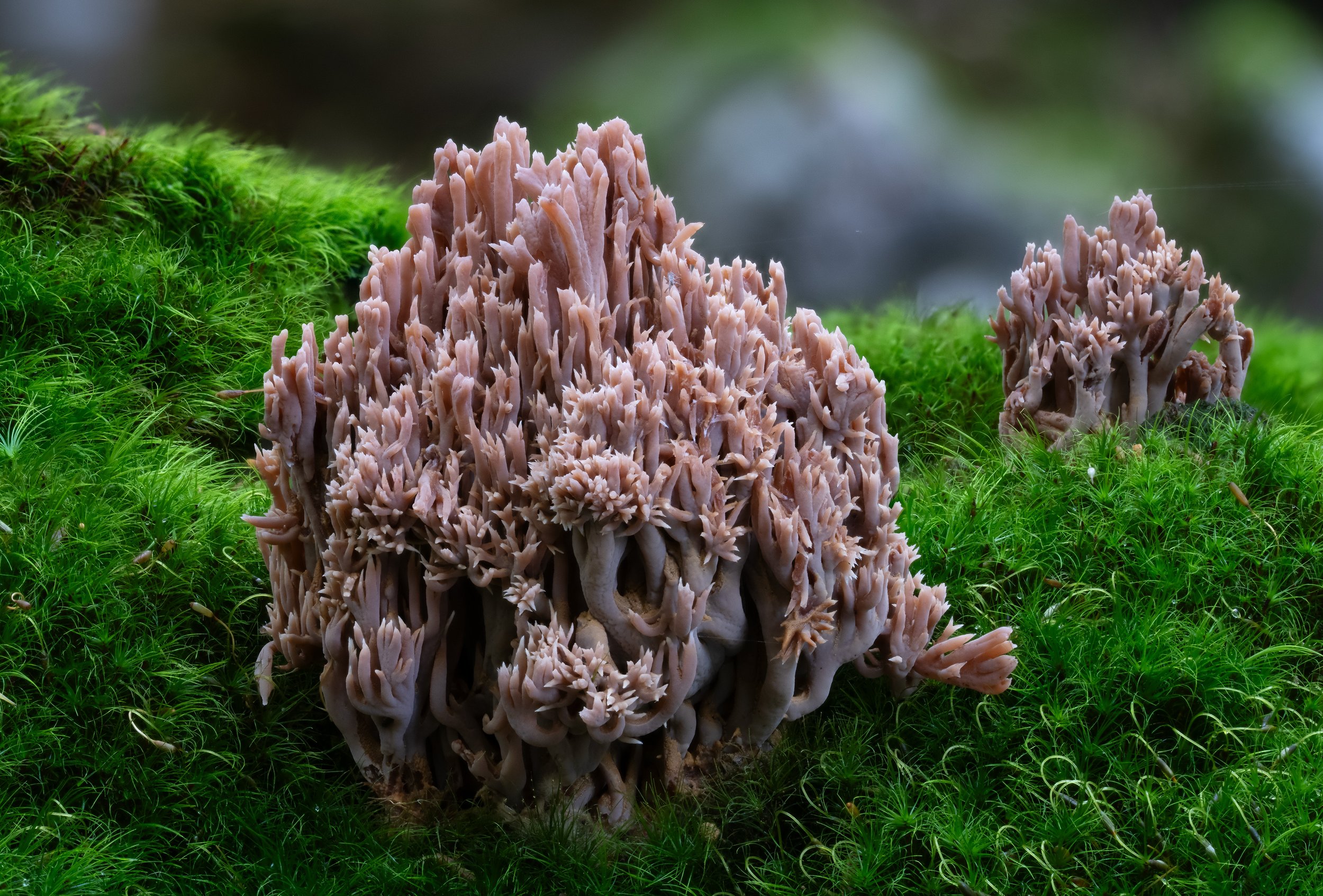
Ramaria sp.
Thank you, as always, for your encouragement and support.
Every view, share, comment and conversation helps us continue documenting the hidden kingdom of fungi and sharing its stories with the world.
Until next time,
Catherine Marciniak & Stephen Axford
Planet Fungi
SUPPORT FUNGAL RESEARCH AND CONSERVATION
If you would like to support more research into and conservation of this fascinating, important, but understudied area of science, there are three organisations we partner with that work tirelessly in these areas.
AUSTRALIA
Big Scrub Conservancy Foundation
INTERNATIONAL
Every little bit helps.
Clavulinopsis amoena