Name that Mushroom!
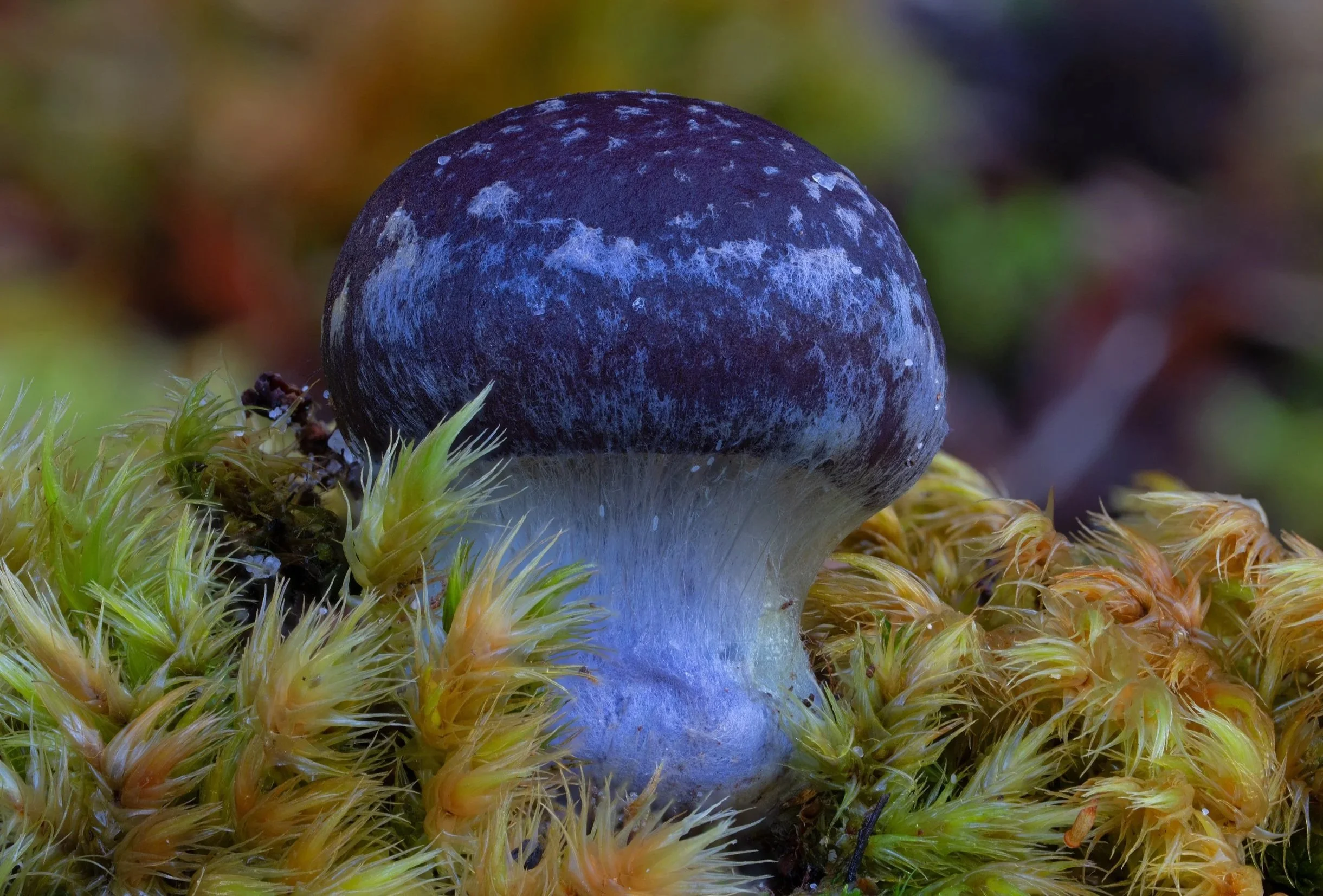
Genus: Cortinarius. Species: unknown
In this blog:
Mystery mushrooms, fungi in policy, a rising mycology star,
and Planet Fungi in North America.
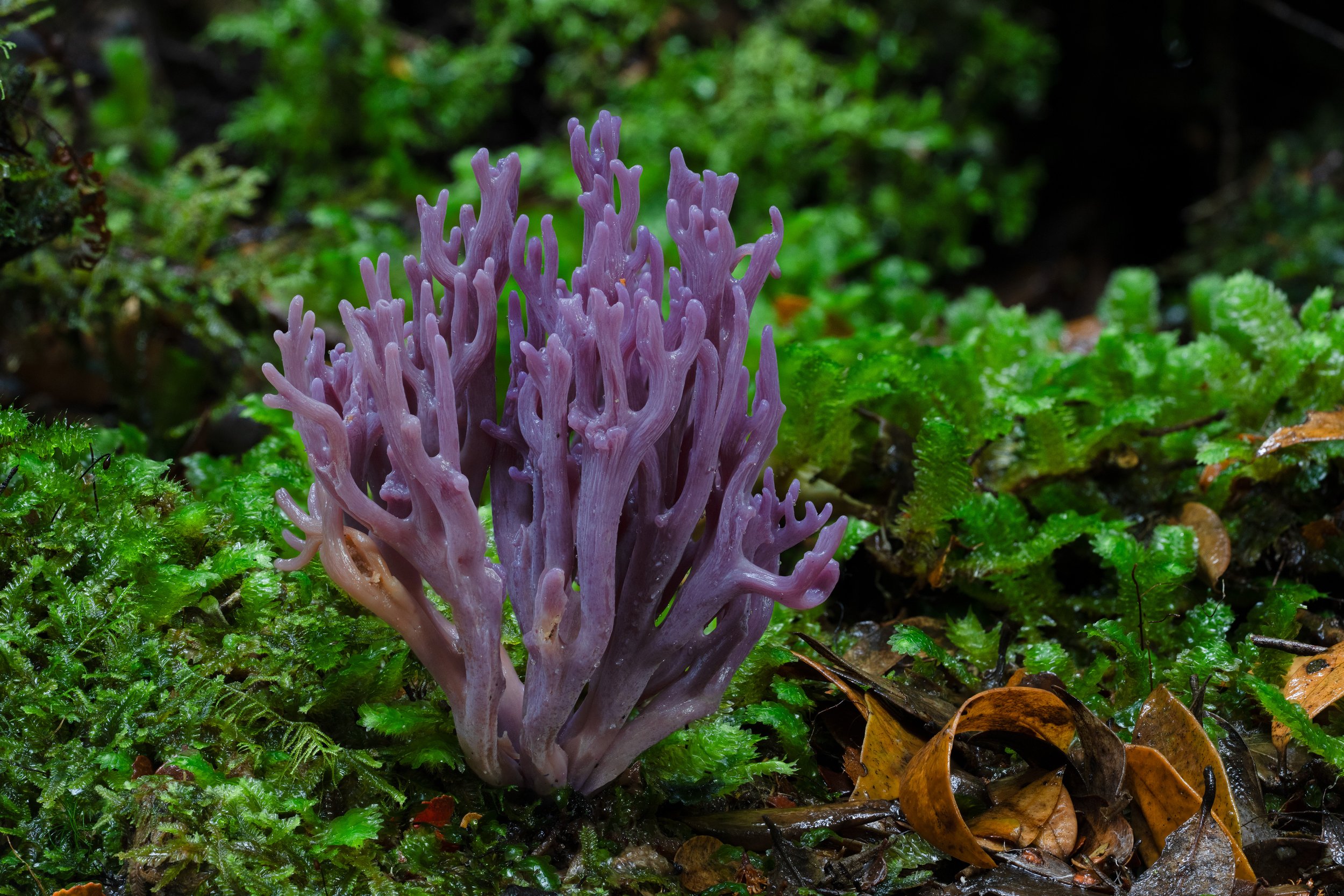
Genus: Clavaria Species: possibly Clavaria lilacina - still being unravelled
We Know This Mushroom. We Just Don't Know Its Name.
Every May, Tasmania calls us back for the autumn fungi season.
The forests are wet; moss forms slippers at the base of ancient trees, and fungi seem to erupt from every available surface.
Since we arrived home in June, we've been sharing some of the photographs of our favourite Tasmanian fungal characters on social media.
But something keeps happening. Not just once but again and again, we can't put a species name to them.
It's a Cortinarius. But which one?
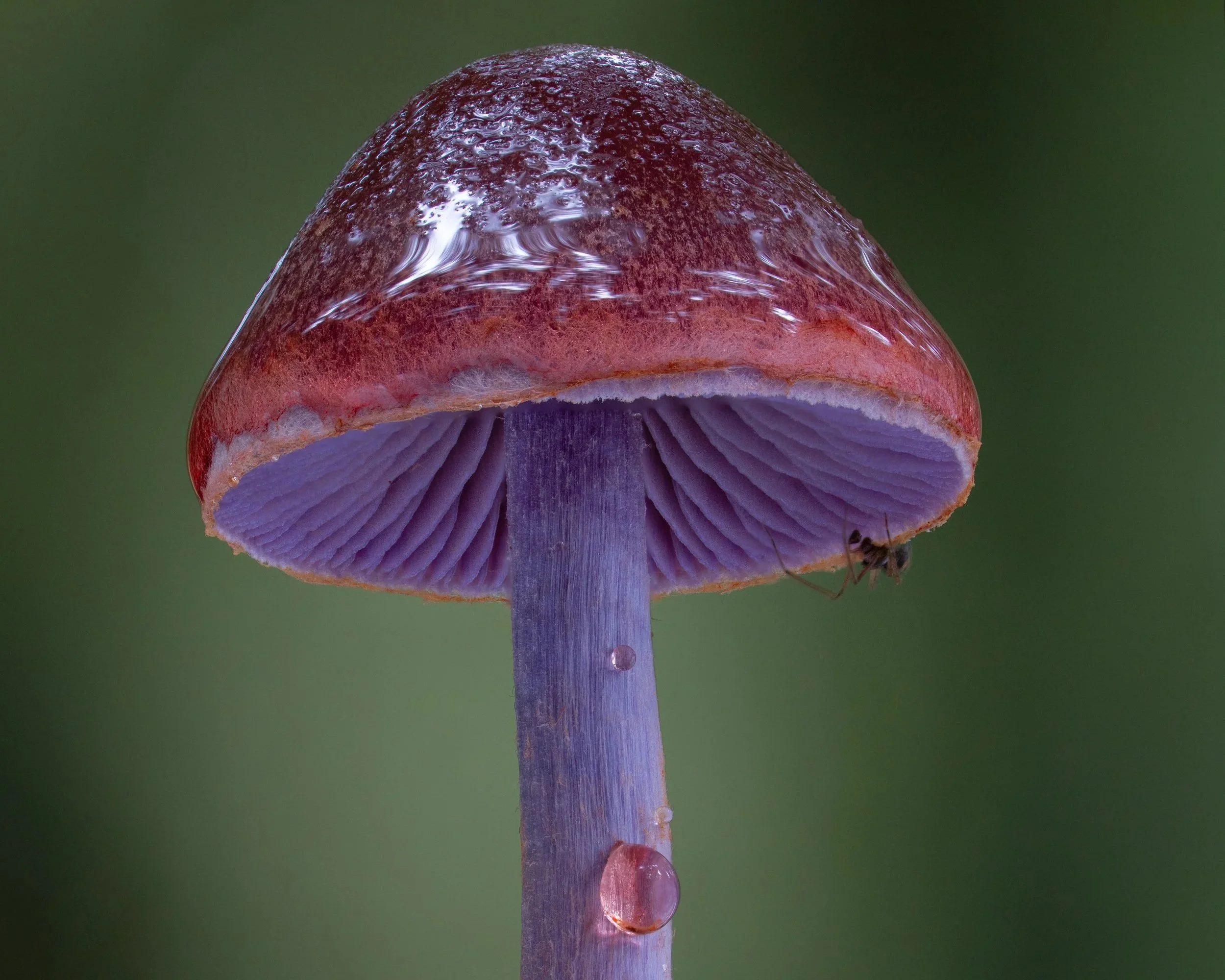
Genus: Cortinarius. Species: unknown
We've photographed some spectacular and flamboyant Cortinarius: from royal purple to glutinous gold, from metallic blue to ruby red caps over lilac gills.
We know they're Cortinarius — the "webcaps", named for the cobweb-like veil, or cortina, that stretches between the cap and stipe of young mushrooms, with remnants of this web clinging to the stipe as the mushroom matures.
But trying to identify the species is where the trail too often ends.
And here's the important bit: many of these are not new to us.
They are fungi we see in Tasmania year after year.
That seems astonishing. Imagine regularly encountering a bird in the forest yet still being unable to identify its species.
With fungi, particularly in Australia, that is not so unusual.
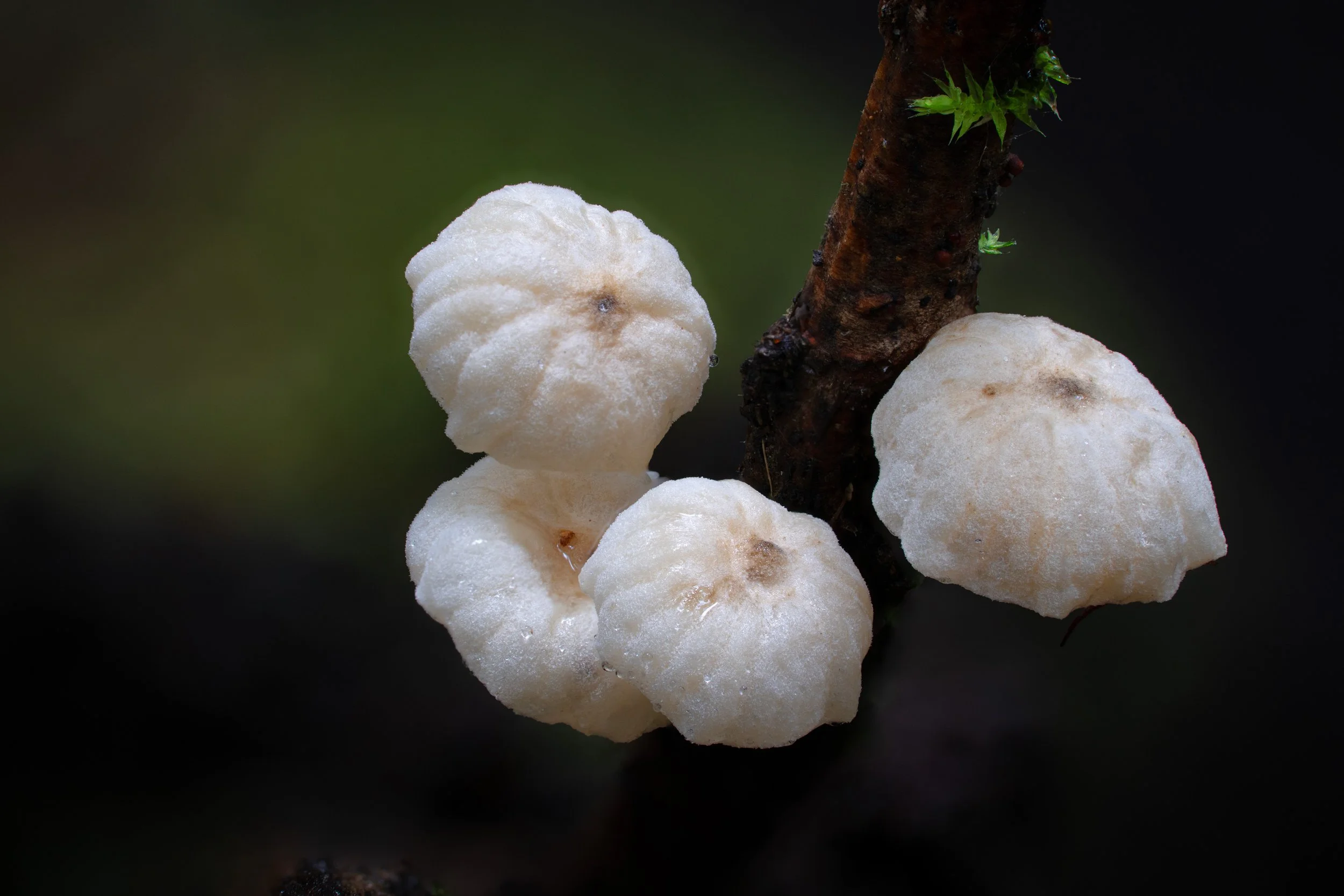
Marasmiaceae sp. Genus: unknown. Species: unknown
Familiar faces without names
Then there are the little fungi.
One of our photographs from May captures a beautiful mushroom growing from a dead twig. We can confidently say Marasmiaceae family. But again we are unsure of the species and even the genus.
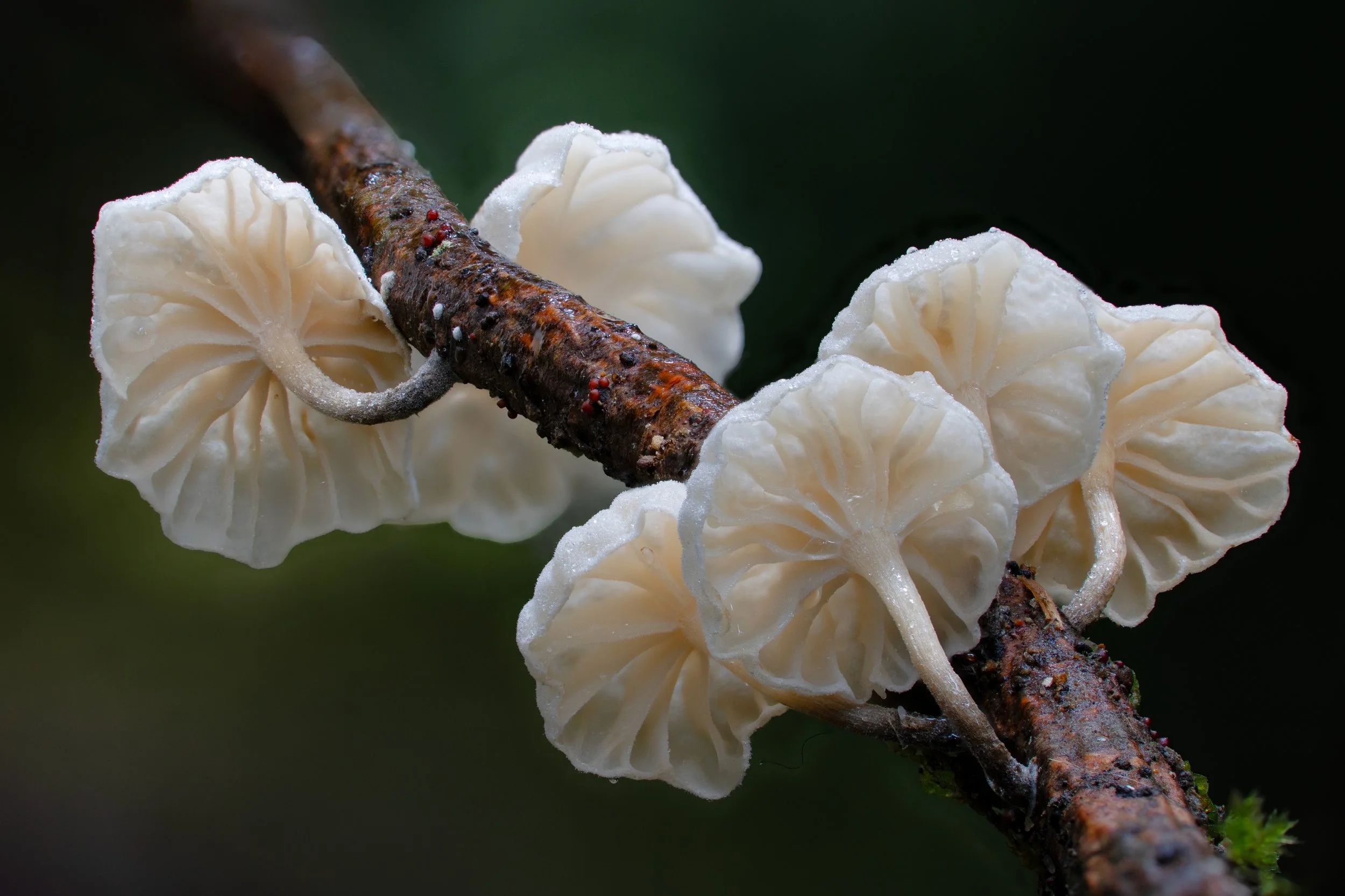
Marasmiaceae sp. Genus: unknown. Species: unknown
Another is a mushroom we have been calling Mycena epipterygia, a Northern Hemisphere name — but in reality we should be labelling it Mycena aff. epipterygia. That little "aff." indicates a big gap in scientific knowledge. It means the fungus has an affinity with, or resembles, that named species, but mycologists think our Australian variety is unlikely to actually be that species.
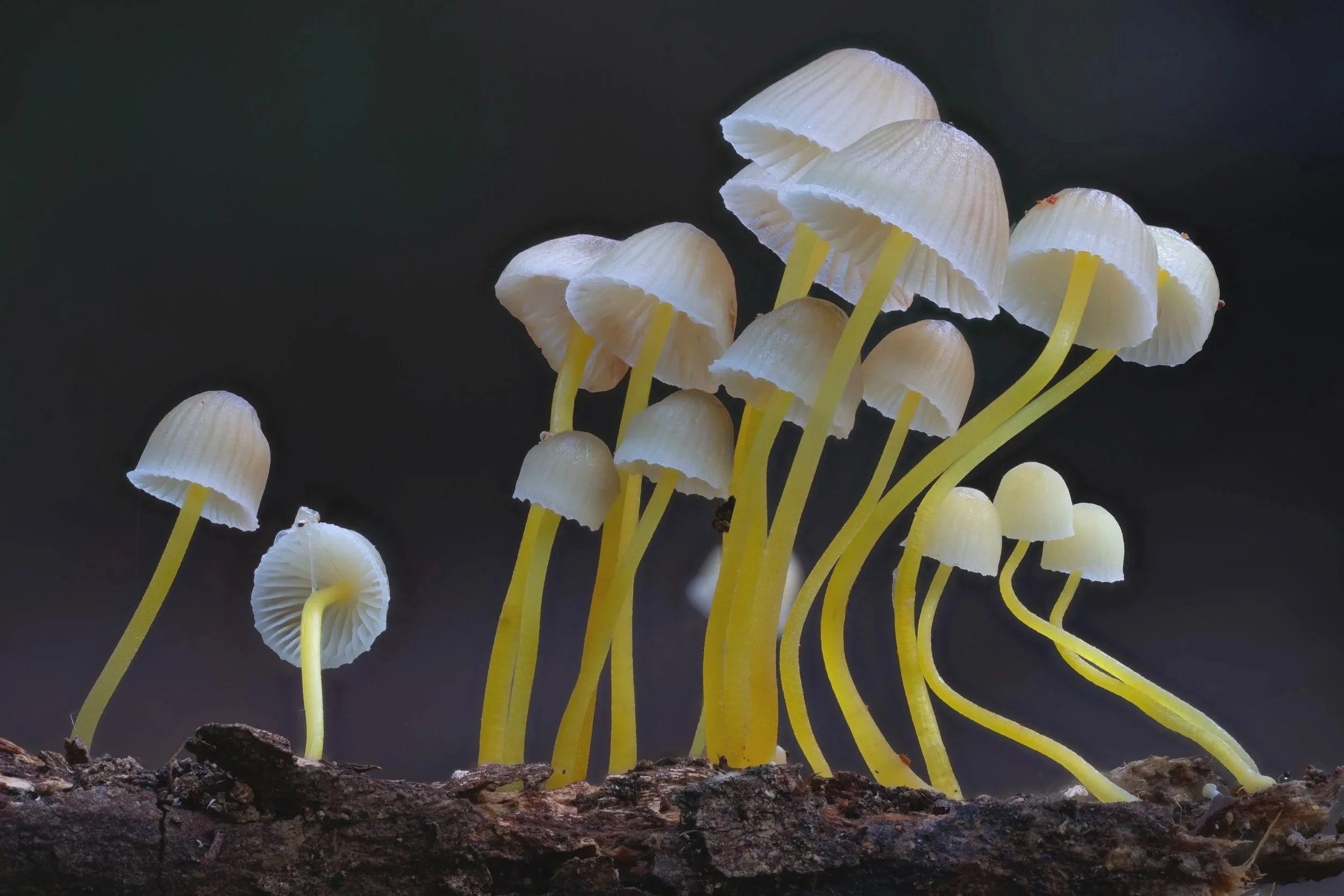
Mycena aff. epipterygia
Our gorgeous purple coral fungus leads us into another identification thicket. Fungi like this have been called Clavaria amethystina, but new research published in 2025 found that true C. amethystina appears to be a Northern Hemisphere species. Australian specimens instead fell within Clavaria lilacina — and even there, the Australian specimens formed their own genetic group, distinct from those in New Zealand and China. So for now, our purple beauty remains part of a taxonomic story that is still being unravelled.
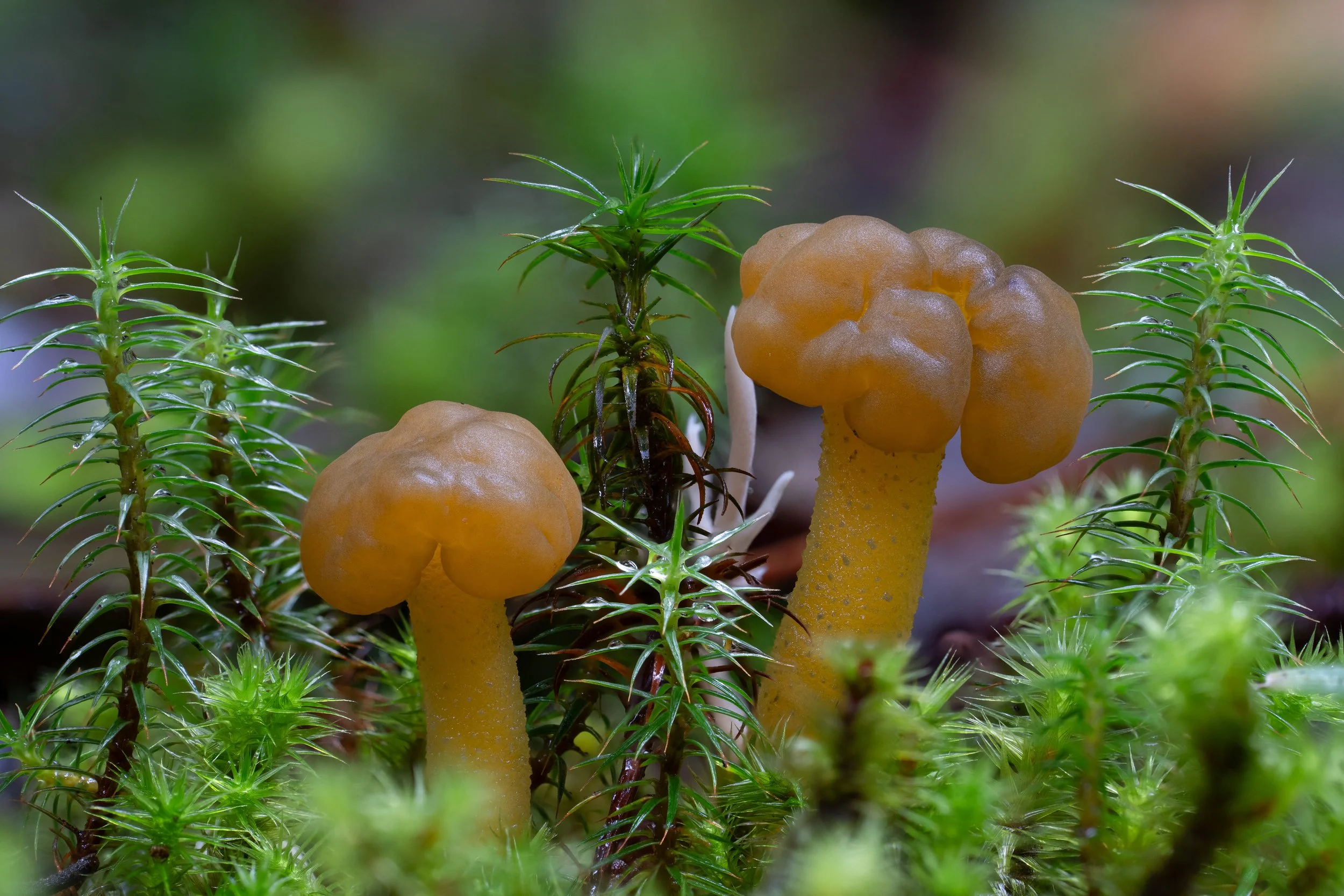
Genus: Leotia. Species: unknown
And those wonderfully gelatinous yellow Leotia? Australian collections have historically been given the Northern Hemisphere name Leotia lubrica, but Australian lineages don't fit neatly beneath that name either.
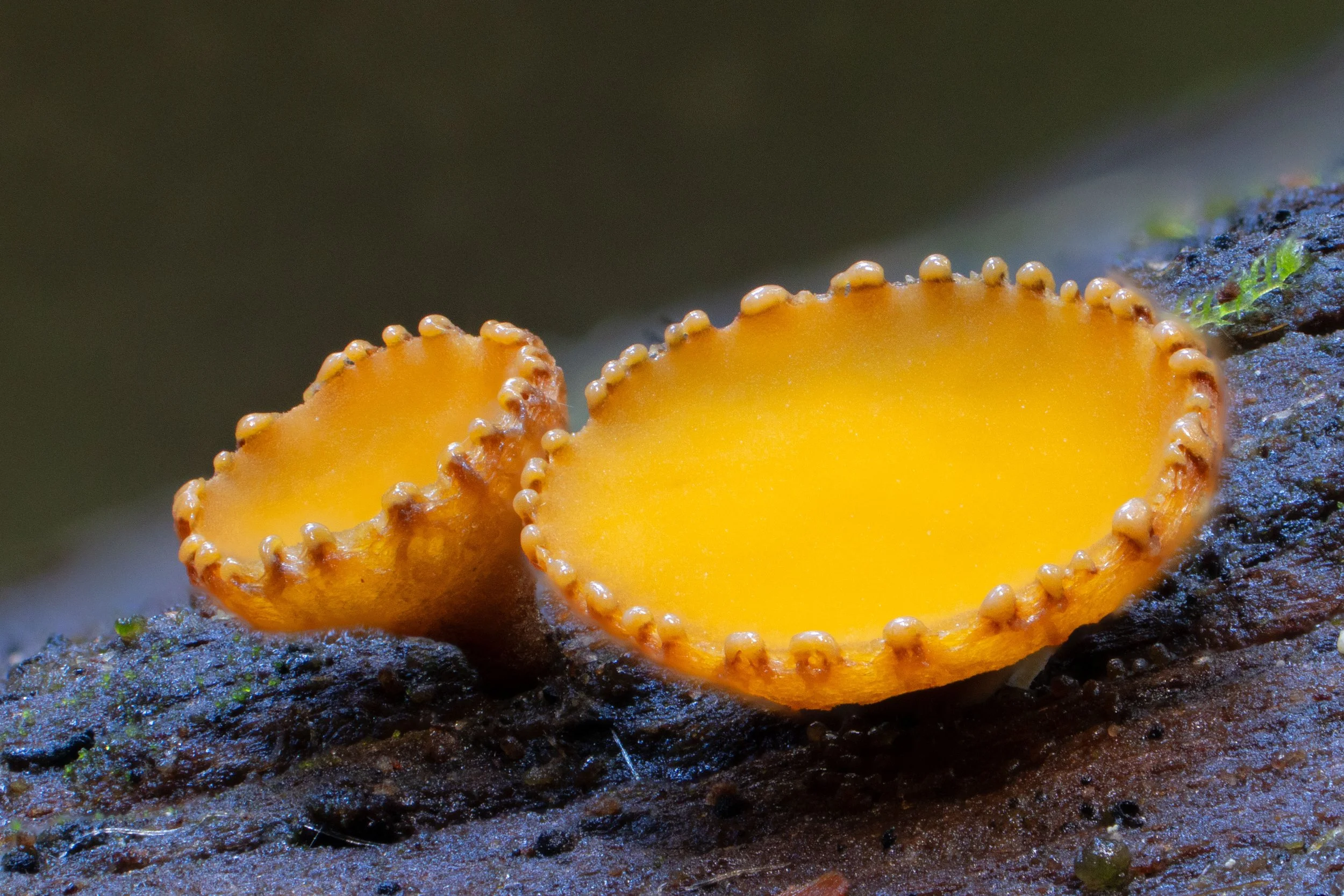
Order: Helotiales. Family: unknown. Genus: unknown. Species: unknown
Then there is a tiny yellow cup fungus in the Helotiales order that we've affectionately called our "lemon tart".
Beautiful. Distinctive. But we can't yet assign it to a species, genus, or even a family of fungi.
A photograph can only take us so far
Documenting the colour, size, shape, gills, pores, texture, substrate and habitat can all provide clues.
But DNA sequencing is revealing that fungi that look almost identical may actually be different species, while also helping untangle the names applied to Australian fungi for decades.
There are an estimated 2–5 million fungal species on Earth, but only around 155,000 have scientific names. Our book Planet Fungi: A Photographer's Foray explores some of our encounters with fungi that turned out to be new to science.
Our latest Tasmanian safari, however, keeps reminding us of another part of the problem.
You don't necessarily have to trek into an unexplored forest and discover a bizarre mushroom nobody has ever seen before.
Sometimes the knowledge gap is sitting beside the same walking track every year.
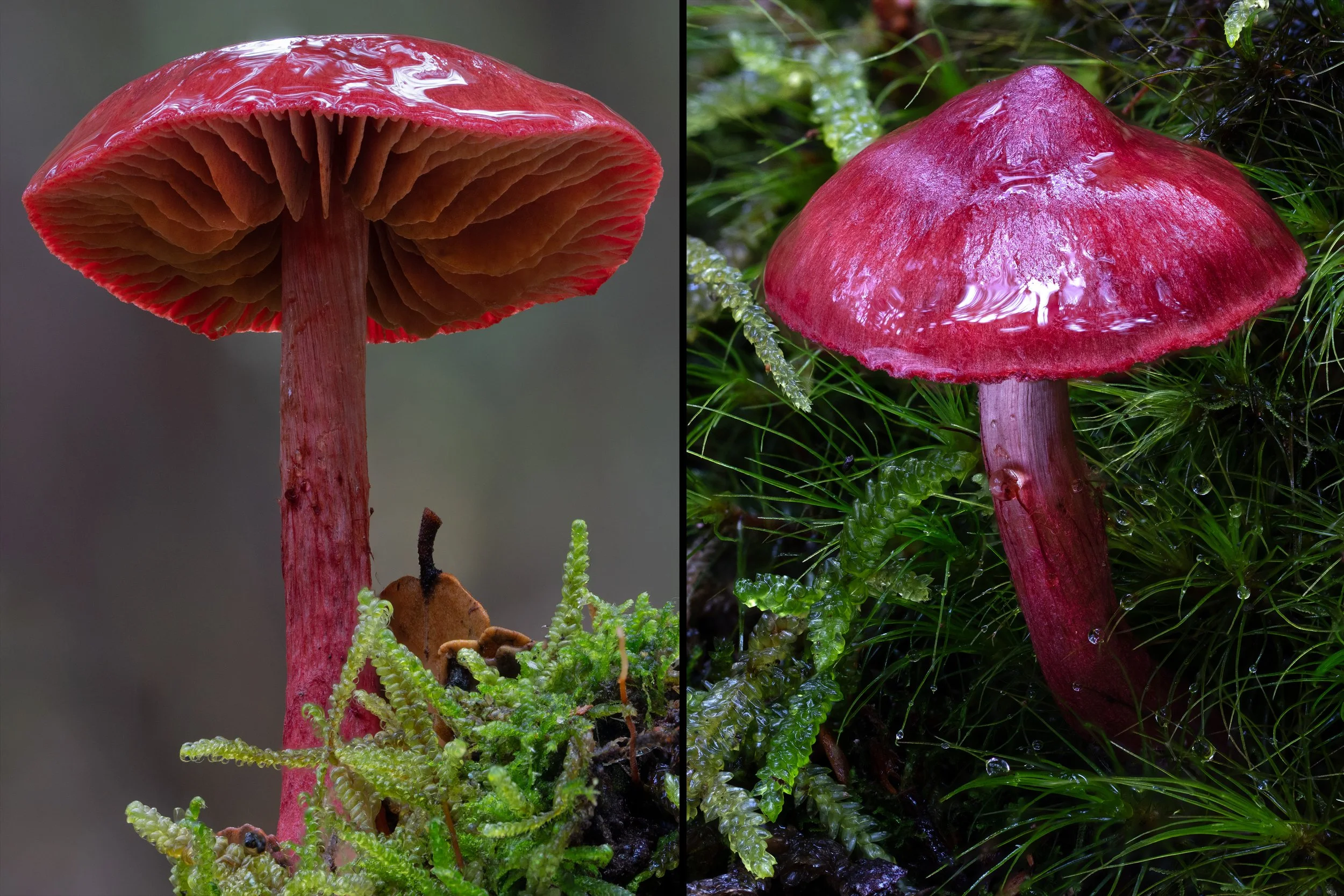
Genus: Cortinarius. Species: unknown
What don't we know?
This is where a missing name becomes much more than a taxonomic inconvenience.
If we don't know what a fungus is, where it occurs or what role it plays, it becomes extraordinarily difficult to understand what we might be losing.
It could be widespread and secure. Or it could survive in just a handful of forest remnants and already be threatened.
It could form an underground partnership essential to the survival of a plant. It could be food or habitat for an animal whose own future is precarious. Its chemistry might one day produce a new antibiotic, medicine or useful material. Its mycelium might be involved in processes that help keep carbon locked in soils for decades, centuries or even longer.
Or perhaps it does something we haven't even thought to look for yet.
And that is the point.
It is difficult to protect what we don't know.
A fungus can disappear from a forest before anyone has described it, mapped its distribution, investigated its ecology or even realised it was in trouble.
So each time we have to put "sp." on a mushroom in a photograph, there is obviously frustration, but there is also possibility.
Because behind that "sp." lies an exciting discovery we can help make happen.
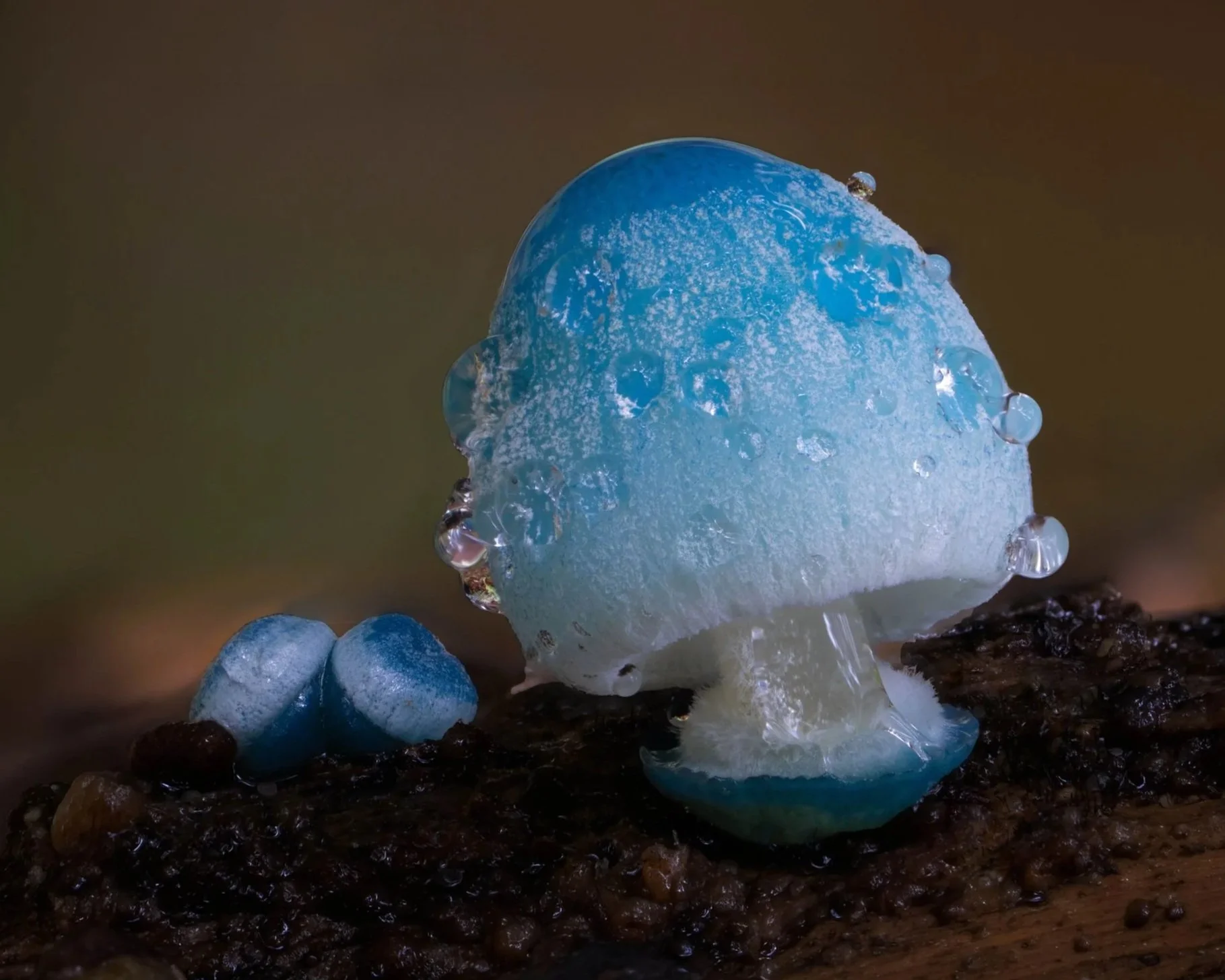
Mycena interrupta - always a favourite on a Tasmanian Fungi Safari
Planet Fungi Lands in North America
This September, Planet Fungi: A Photographer's Foray was officially released in the United States and Canada — bringing Stephen's fungi photography and the stories behind it to a whole new audience.
To celebrate, we thought we'd continue our Tasmanian theme and take you with us on a stroll in the forest with our friend, mycologist and author Merlin Sheldrake.
Merlin has followed Stephen's photography for many years, and hearing him talk among those ancient trees about the way Stephen's images have changed how he sees fungi was rather special for both of us.
His words also capture something we hoped to achieve with this book. We wanted it to be beautiful, of course. But we also wanted the photographs to draw people into the extraordinary lives of fungi — their ecology, their relationships and the discoveries still being made around them.
And it seems readers and reviewers are responding to that combination.
“This is simply the ultimate in fungal coffee table books.”
— Alick Henrici, Field Mycology
Justine E. Hausheer of Cool Green Science called it “a perfect read for anyone who loves natural history, photography, or is curious about the fantastic world of fungi living all around us.”
Dr Phoebe McInerney, writing for the Royal Society of South Australia, described it as “a stunning journey of colour and scientific insight”, while Zita Milwain of UK Fungus Day said, “I challenge you not to be in awe of this work of art!”
After years spent crawling around wet forests, waiting for time-lapses, chasing elusive species and trying to understand what we were photographing, it is enormously satisfying to see those fungi now finding their way into homes across North America.
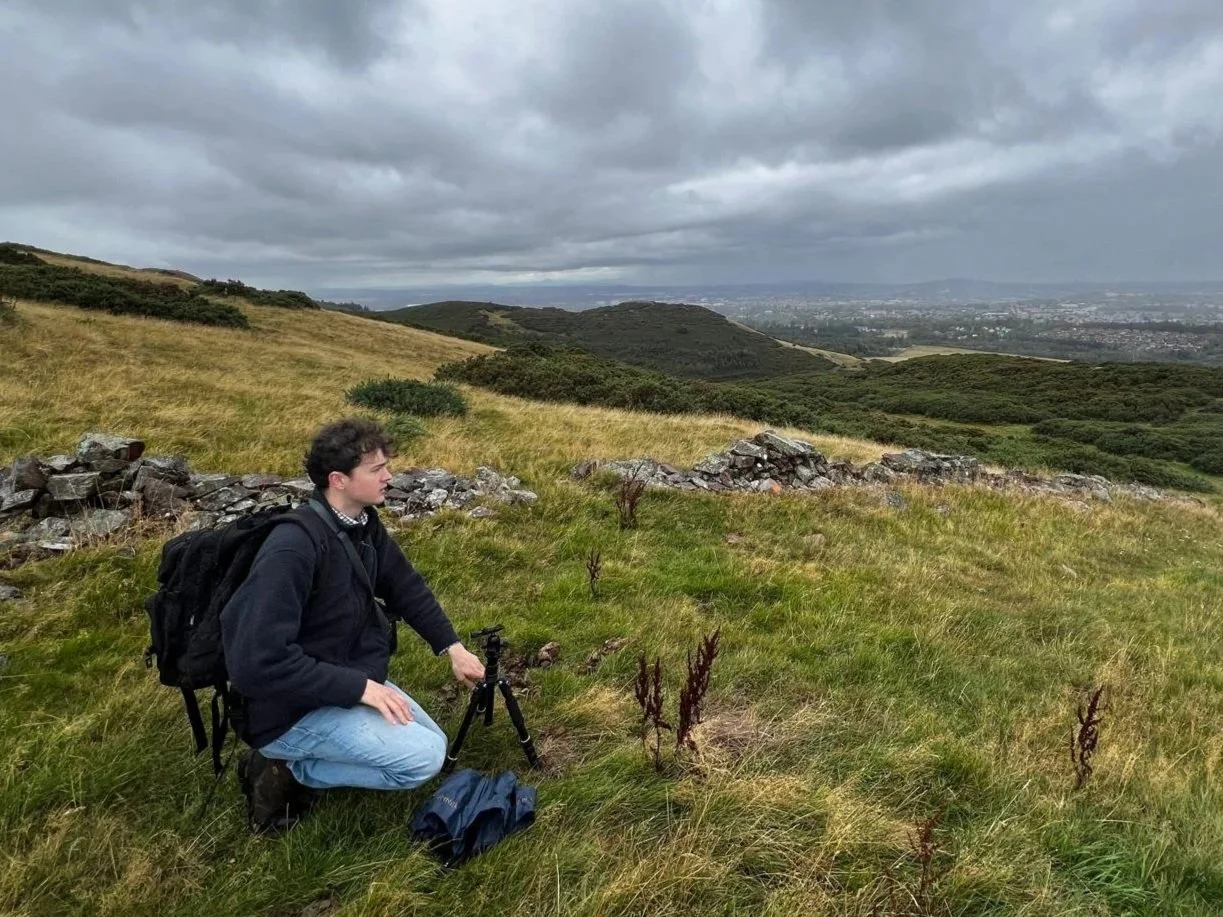
RISING STAR: ALFRED DRUMMOND-HERDMAN
The young mycologist making dung look elegant
For five years, Stephen and I had been watching the work of a young Edinburgh-based mycologist, Alfred Drummond-Herdman, appearing in our social media feeds.
Tiny inkcaps unfurling, then self-digesting. Slime mold capsules cracking open to reveal a tangle of capillitium threads and thousands of spores. Cannonball fungi catapulting their spores into the world.
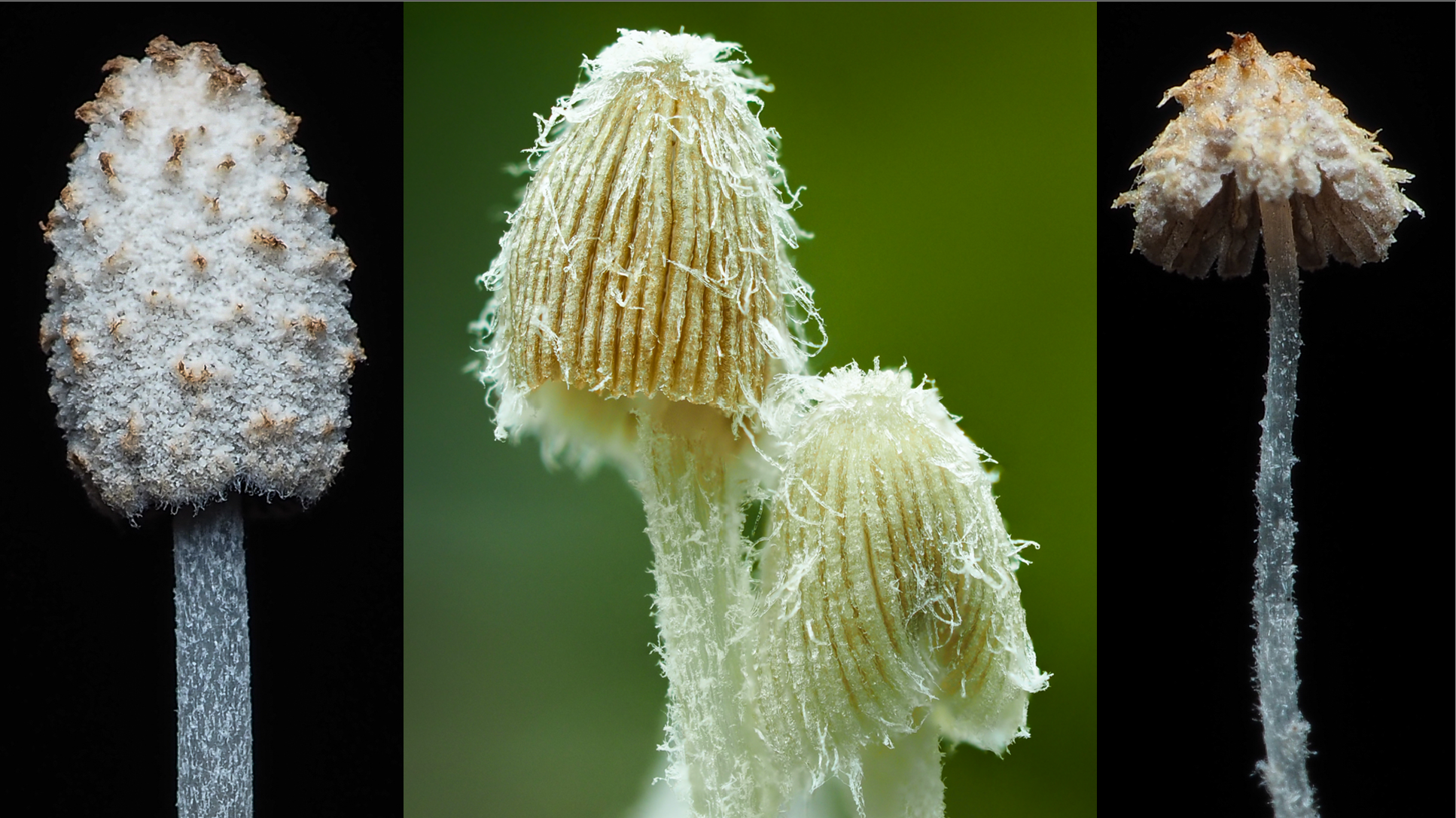
And the fun part- most of it is emerging from poo. Cow pats. Rabbit pellets. Deer droppings. Grouse droppings.
Alfred has discovered an extraordinary miniature world in something most of us step around.
That caught Stephen's and my attention.
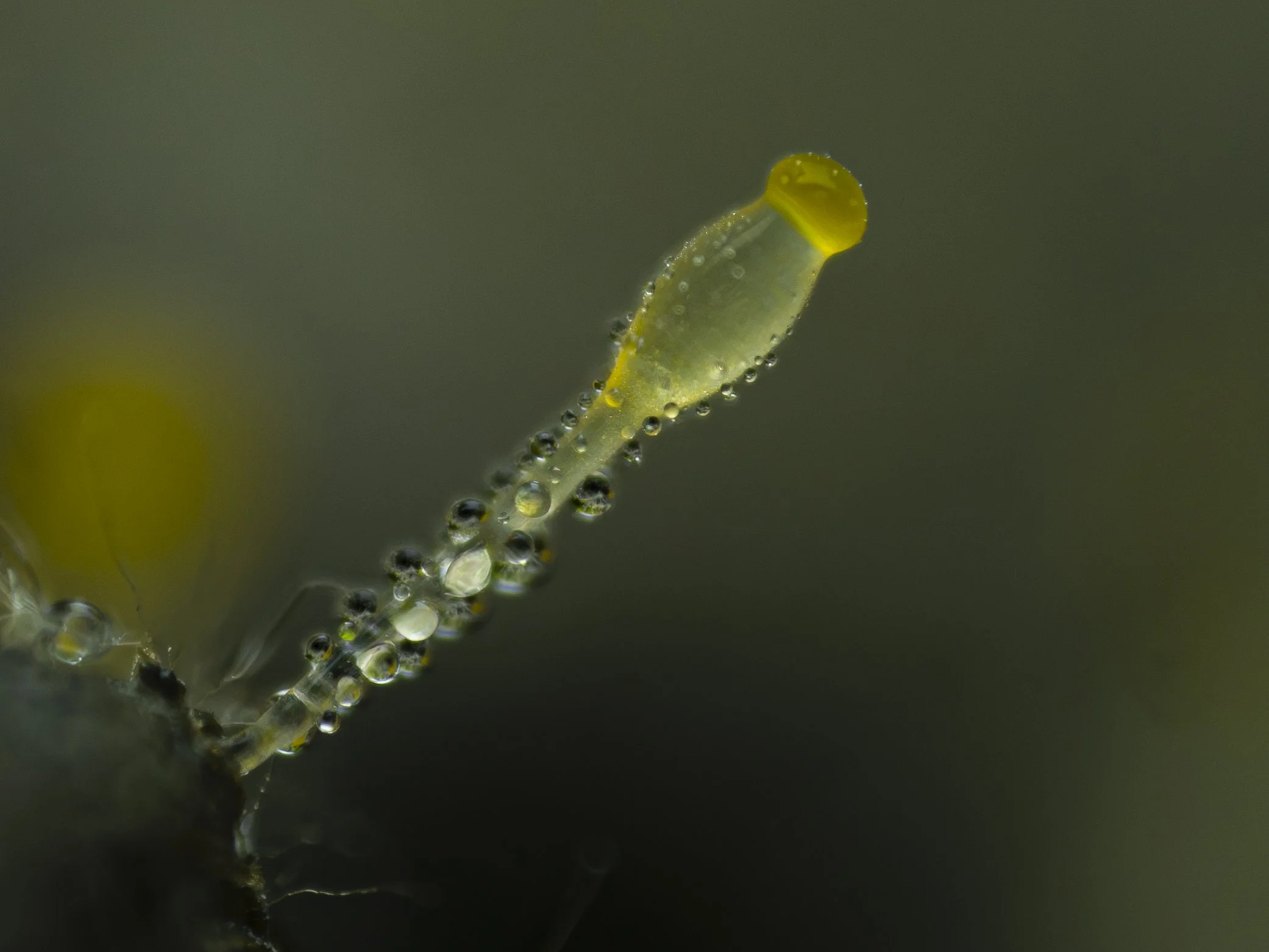
There are few people in the world who do what Stephen does - use high-quality time-lapse to explore the lives of obscure fungi.
But here, on the other side of the world, we were seeing Alfred taking fungal time-lapse in his own wonderfully distinctive direction.
Stephen understood just how challenging this is and how skilled Alfred was becoming.
Fungi time-lapse is not simply a matter of pointing a camera at a mushroom and waiting. You need to understand your subject well enough to anticipate what it might do, create the conditions it needs to grow, control light and moisture, maintain focus and framing as the sporing body changes — and then hope your tiny star performs.
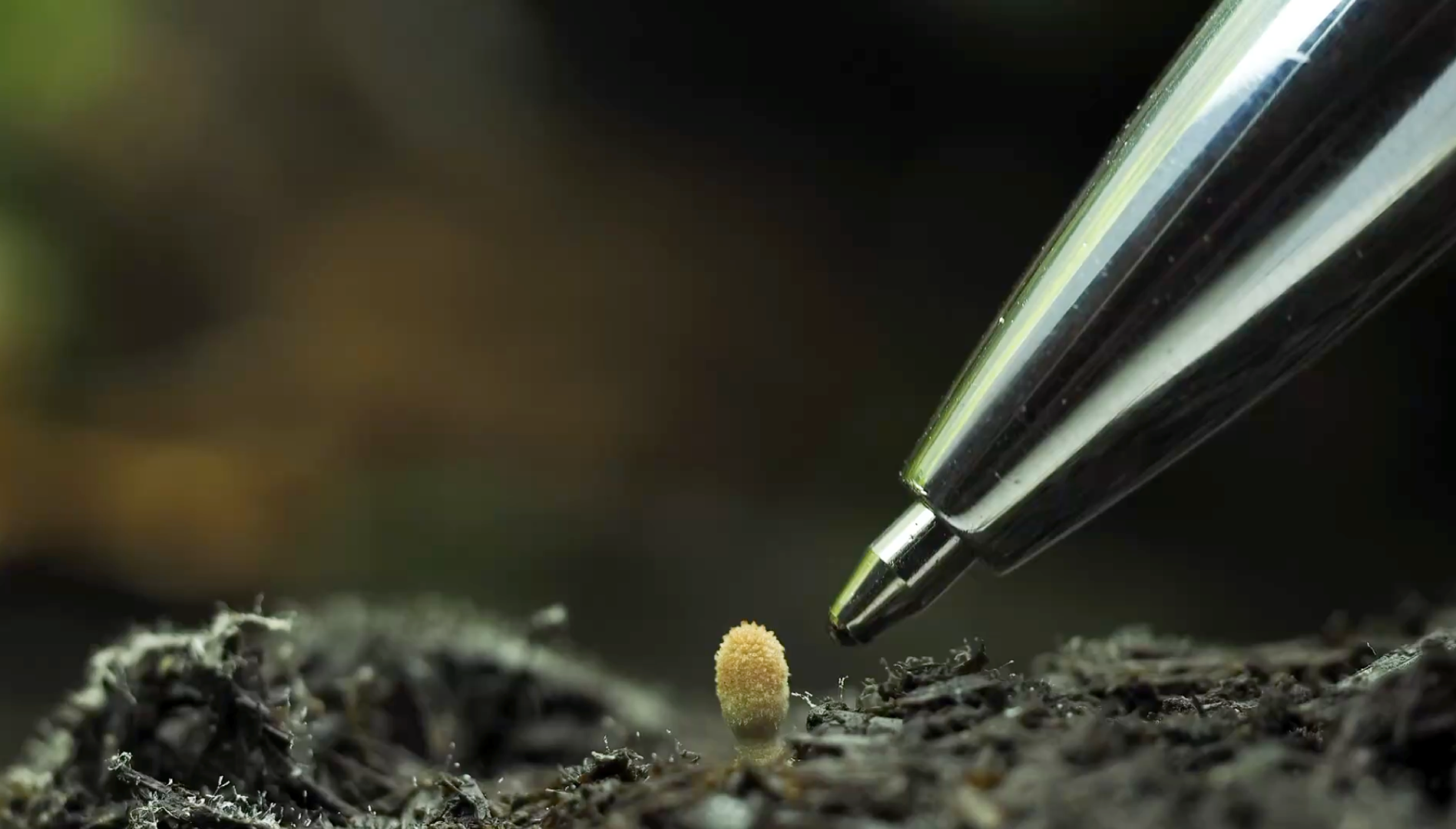
What fascinated us about Alfred was that the photography and the science were growing together. The more closely he observed these tiny fungi, the more questions he asked about them. And the more he learned about them, the better able he was to reveal and share their extraordinary lives through time-lapse.
And increasingly, Alfred wasn't just photographing fungi. He was identifying species new to science.
So when we discovered that Alfred would also be a guest at PilzFestspiele in Austria in 2025, we were delighted.
We finally met the young man behind all those dung-loving fungi.
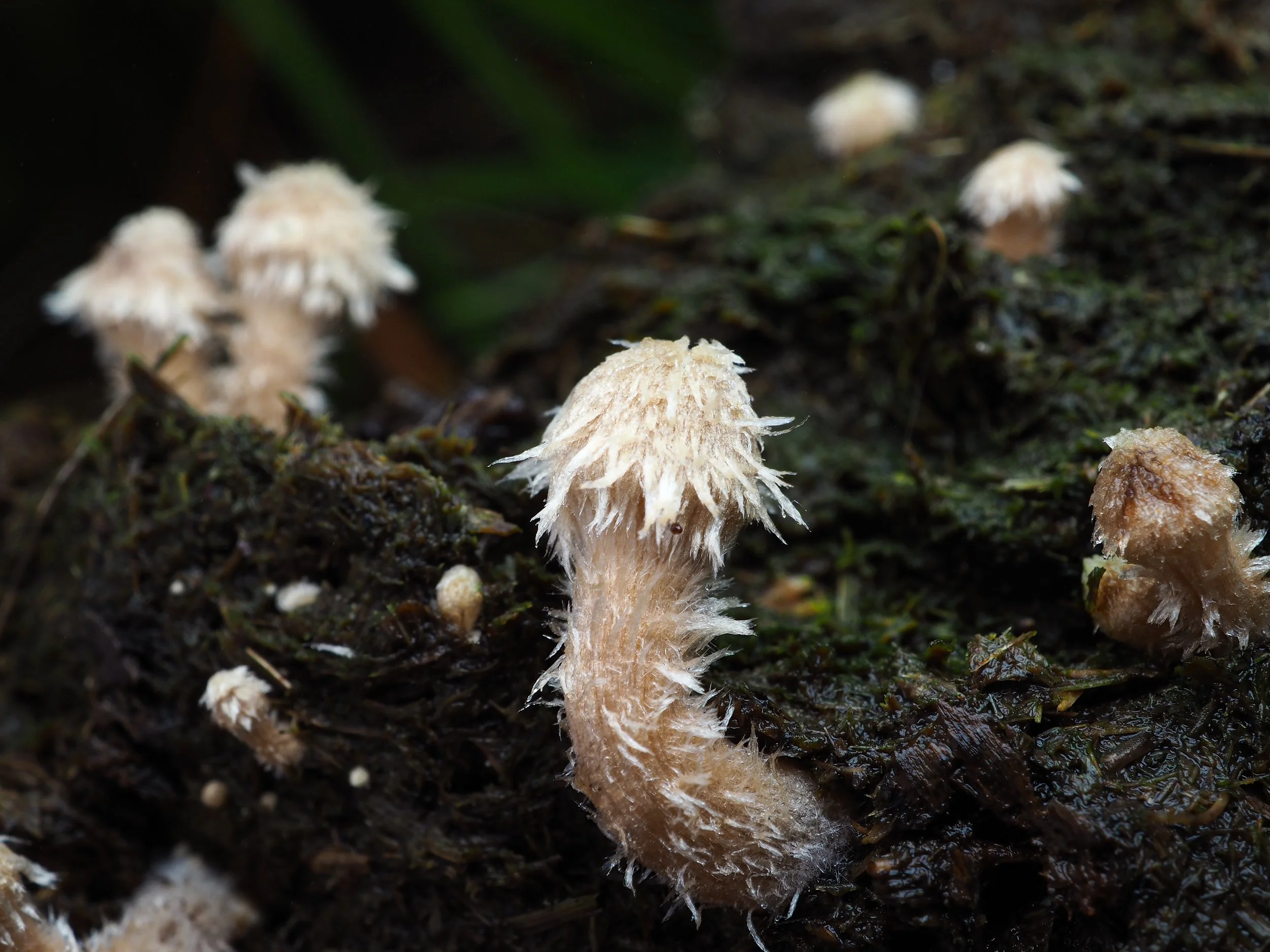
We were not disappointed. Alfred is quietly curious, thoughtful and passionate about the tiny fungal worlds most people overlook. There is an understated quality to him that belies just how much he knows, and an infectious enthusiasm for all things fungi. Sound familiar?
Check out Alfred’s miniature world of fungi and time-lapse. You will be awestruck.
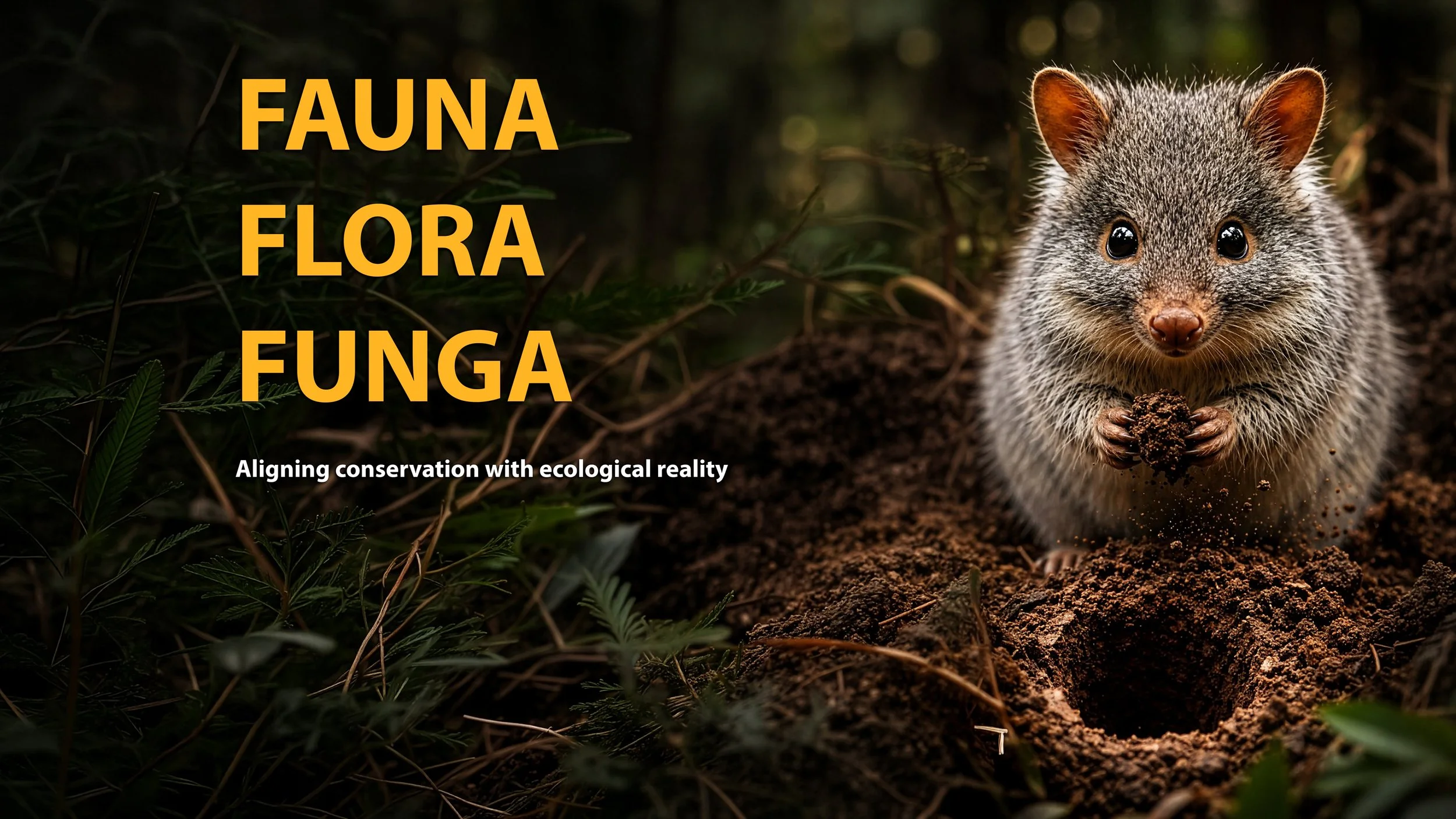
Australia’s Woylie and Northern Bettong are listed as Endangered. They rely completely on forest truffles for their food. (AI-assisted image)
One word. An Entire Kingdom.
If our Tasmanian fungi story demonstrates just how much we still don't know, there has recently been an important step towards changing that.
In August, the Australian Labor Party became the first major Australian political party to explicitly recognise fungi alongside flora and fauna in its National Platform. The revised environment chapter commits Labor to conservation and restoration outcomes for Australia's "flora, fauna, fungi, oceans and waterways" and to championing the conservation of Australia's "flora, fauna and fungi."
On paper, the change amounts to adding a word: fungi.
In reality, it acknowledges an entire kingdom of life that has been largely missing from the language of Australian environmental policy.
And this is no minor omission. Fungi are fundamental to life on Earth — building soils, recycling nutrients, forming partnerships across ecosystems and quietly underpinning the forests, grasslands and other living systems around us.
It is an important first step. Next are getting fungi explicitly recognised alongside plants and animals in Australia's environmental legislation and conservation frameworks, and securing greater investment in the taxonomy and research needed to discover what Australia's fungi actually are.
Because, as our Tasmanian safari keeps reminding us, how can we protect what we don't yet know?
The announcement generated some wonderful media attention, taking the conversation about Fauna, Flora and Funga well beyond the mycological community.
READ MORE
ABC News — Fungi fans celebrate its recognition as nature's third living kingdom — a substantial feature exploring why recognition matters and what could come next.
RMIT — Flora, fauna and fungi: Labor backs recognition of a third major life group — with an independent scientific perspective on the significance of including fungi.
Fungimap — Fungi recognised in Labor's National Platform — more on the campaign to put the third F into Australian environmental thinking.
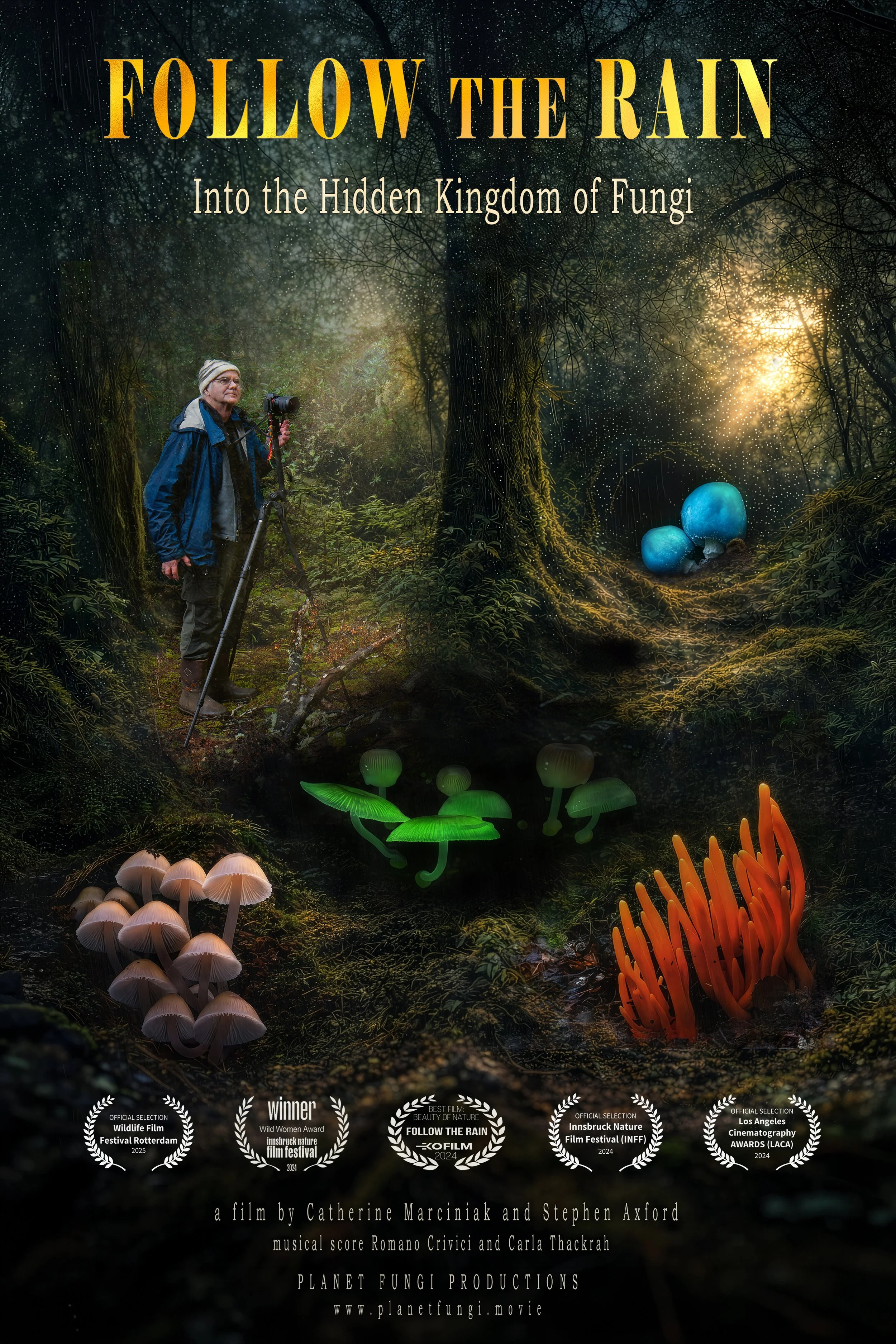
FOLLOW THE RAIN — BACK IN THE USA BY POPULAR DEMAND
After sell-out screenings in Eugene, Oregon, in April, our friends at the Cascade Mycological Society are bringing Follow the Rain back for an encore this November.
ARTHOUSE
Saturday 21 November — 6:30 pm
Sunday 22 November — 1:30 pm
A wonderful collaboration with a passionate fungi community on the other side of the Pacific.
EXPLORE WITH PLANET FUNGI
There are now plenty of ways to join us on our fungal adventures.
🎟️ Host a community screening of our award-winning documentary Follow the Rain.
🍿 Watch our award-winning documentary Follow the Rain, currently streaming in Australia and New Zealand — Netflix, Germany — RTL, Thailand — TrueVisions.
📖 Discover our book, Planet Fungi: A Photographer's Foray.
🏫 Bring the magic of fungi into the classroom with our free Follow the Rain Study Guide.
🎬 Enjoy more free fungi documentaries on the Planet Fungi YouTube channel.
📷 Follow our latest photography, films and adventures on Instagram and Facebook.
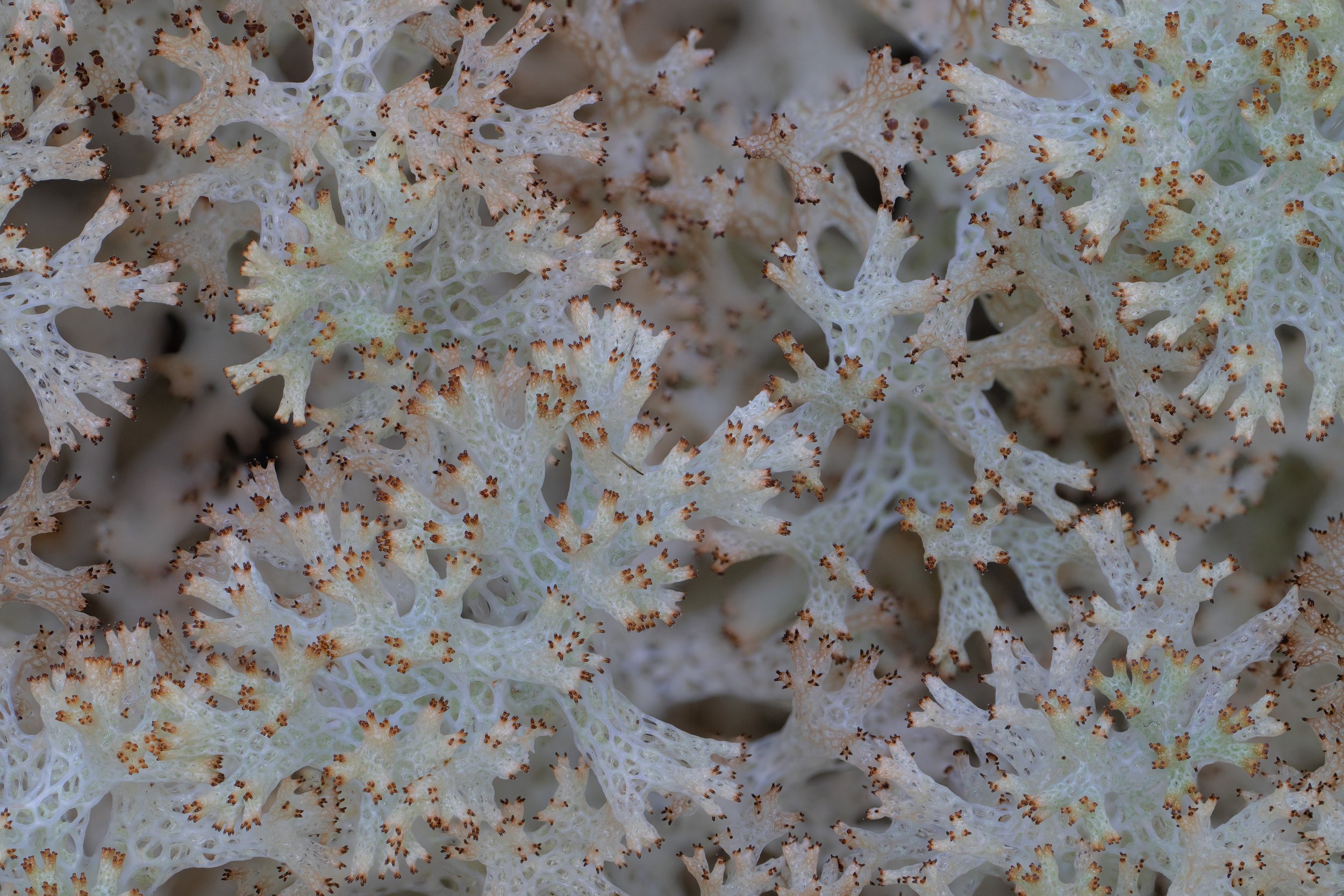
Pulchrocladia retipora — the Coral Lichen — a stunning piece of fungal architecture.
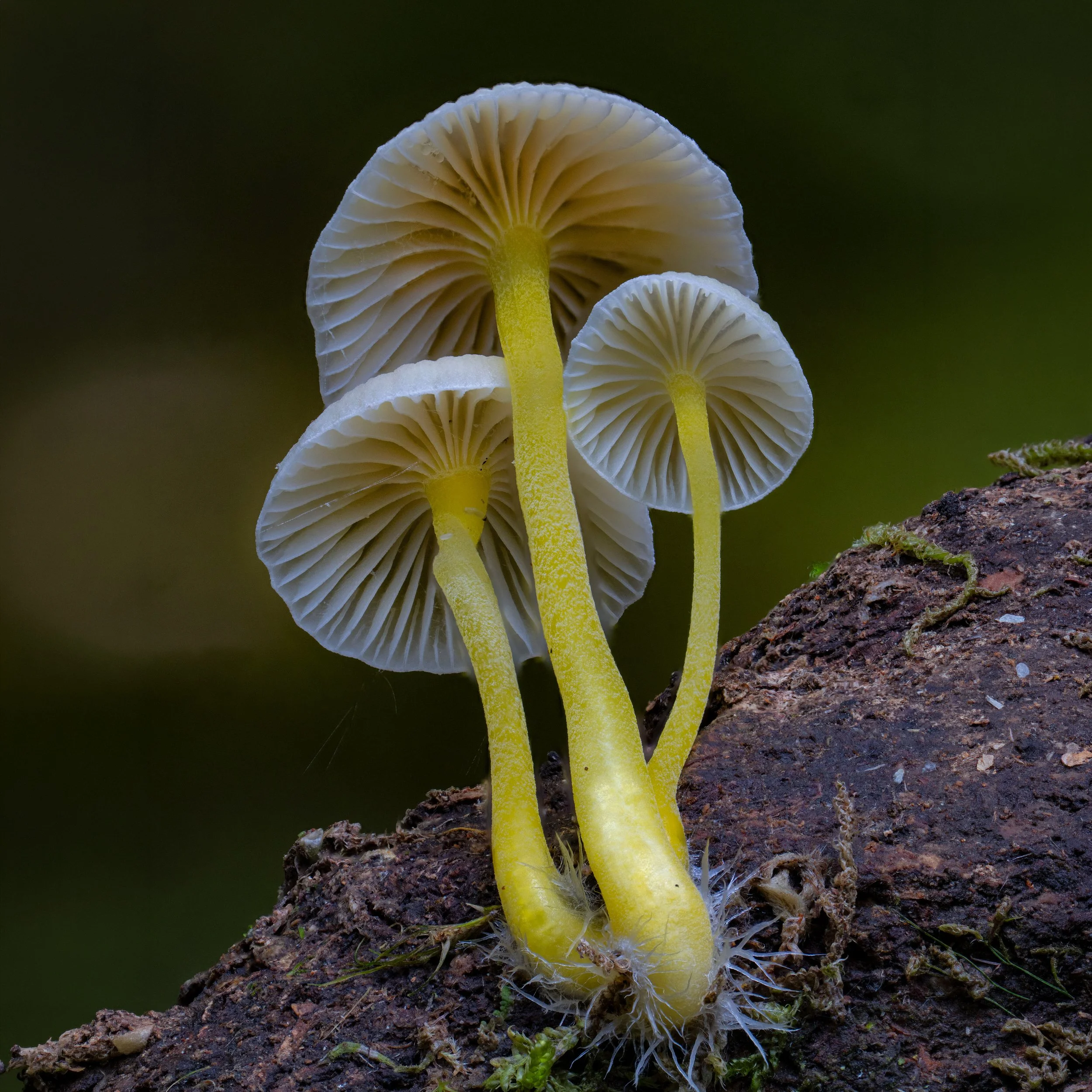
Mycena aff. epipterygia
Thank you, as always, for your encouragement and support.
Every view, share, comment and conversation helps us continue documenting the hidden kingdom of fungi and sharing its stories with the world.
Until next time,
Catherine Marciniak & Stephen Axford
Planet Fungi
SUPPORT FUNGAL RESEARCH AND CONSERVATION
If you would like to support more research into and conservation of this fascinating, important, but understudied area of science, there are three organisations we partner with that work tirelessly in these areas.
AUSTRALIA
Big Scrub Conservancy Foundation
INTERNATIONAL
Every little bit helps.
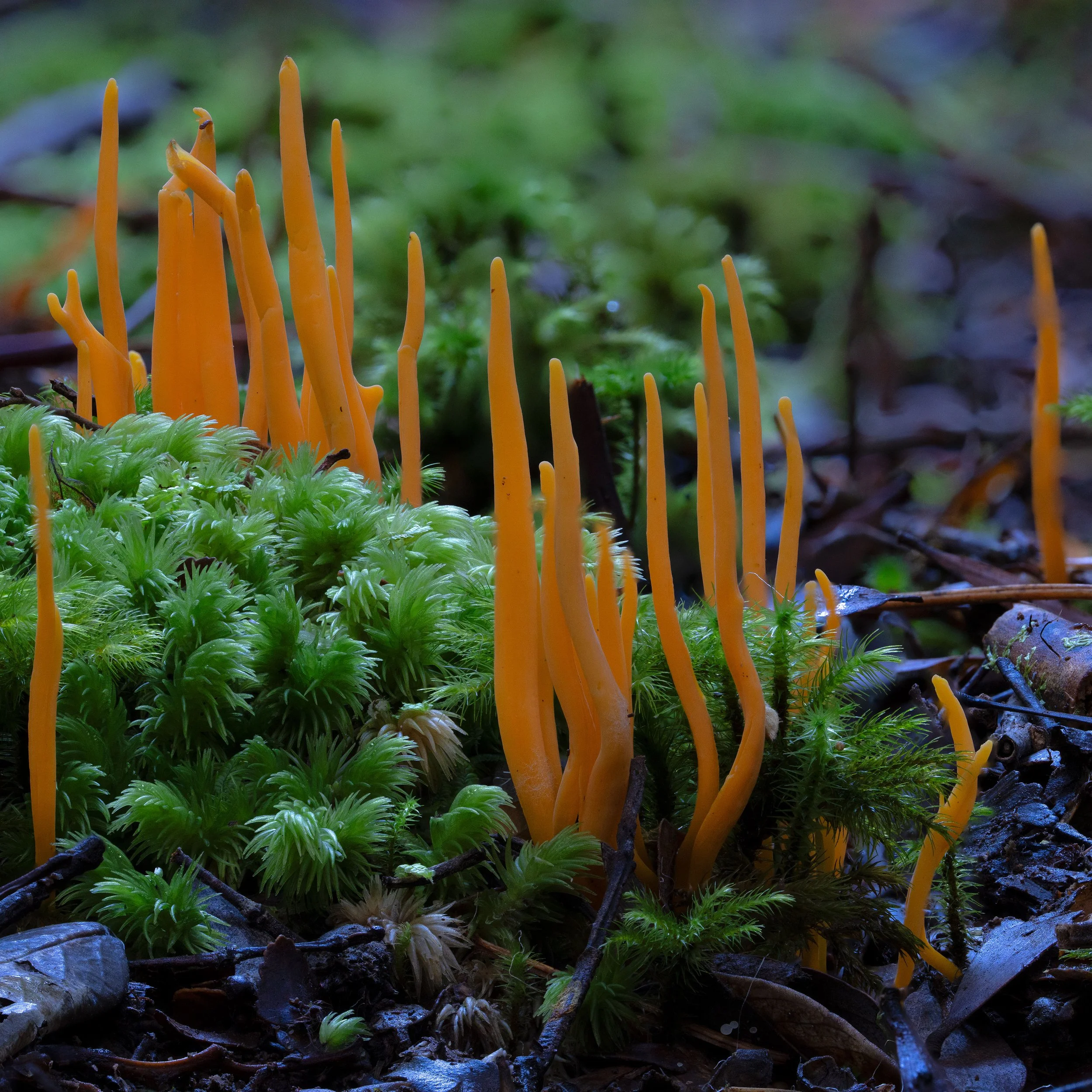
Clavulinopsis amoena